

チョンウプ旅行の醍醐味を収める
内蔵山国立公園を抱える都市チョンウプ。高麗の俗謡『チョンウプサ』の発祥地でもあり、東学革命の先頭に立った緑豆将軍チョン・ボンジュンの生家がある。湖南第一亭という別称を持つ宝物のピヒャンジョンや、新羅の大学者チェ・チウォンを祀るムソンソウォン、朝鮮後期の家屋様式を示すキム・ドンスの家屋が続く。クジョルチョウが咲くオクジョン湖の美しさも特別である。
この場所はどうでしたか?
このコースは1日旅程のサンプルです。そのまま保存するか、AI日程に拡張できます。
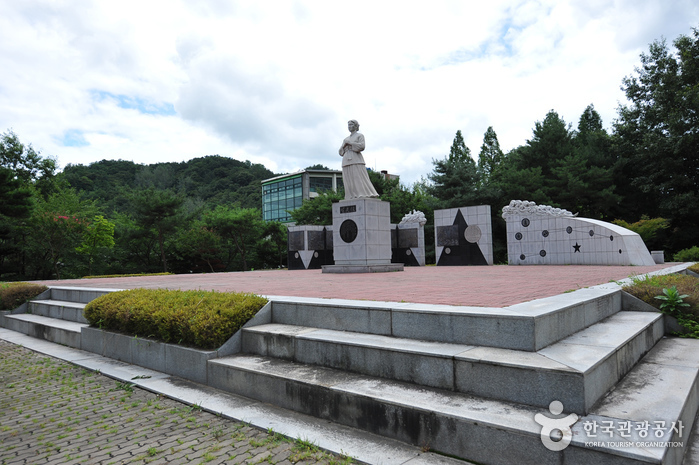
Gapo Donghak Revolution 100th Anniversary Monument 〉


This monument, located where it overlooks Naejang Reservoir, commemorates the 100th anniversary of the Donghak Peasant Revolution and was erected on May 11, 1997. Next to it is the Naejangsan Sculpture Park. Made of granite, marble, and oseok, the monument consists of a main tower and a sub tower. The main tower’s four-sided pyramid symbolizes the ideals of the Donghak Peasant Revolution, and the white marble represents the spirit of the national uprising. To honor the year 1894, when the revolution occurred, it was built to a height of 1,894 meters. The triple-tiered gold trim at the top represents the Gobu Peasant Uprising, March Baeksan Uprising, and September Samnye Uprising. The sub tower made of Mungyeong stone comprises four cylindrical pillars symbolizing the four principles: people, equality, horizontality, and society, each pillar measuring 1,100 meters high and 85 cm in diameter. This monument was created by installation artist Jeon Su-cheon, a native of Jeongeup. Nearby are Naejangsan Water Park and Naejangsan Cultural Square.
점심식사(비원한정식, 백학농원 호롱마을) 〉
[비원한정식] 비원한정식은 전북 정읍 시외버스터미널 옆에 바로 위치한 곳으로 유명 인사들이 많이 다녀간 곳이다. 오리 훈제무침, 삼계탕, 회, 고등어조림, 너비아니구이, 병치찌개, 보쌈, 굴튀김, 육회 등의 다양한 음식들이 준비되어있으며 후식으로 수정과가 제공된다. [백학농원 호롱마을] 농원이란 이름이 붙어있듯 상에 올리는 모든 음식은 거의 모든 재료를 무공해로 직접 재배해서 나온다. 된장, 고추장은 물론, 참기름이며 묵, 두부 등 직접 만든다. 소, 돼지는 음식물 찌꺼기 등을 먹여 키워 항생제에 길들여지지 않은 것으로 마련한다.
Jeongeup Pihyangjeong Pavilion 〉


Pihyangjeong Pavilion, widely known as the finest pavilion in Honam, originally had two ponds named Sangyeonji and Hayeonji in front and behind it, creating a beautiful scenery. However, Sangyeonji was filled in during the Japanese colonial period, and only Hayeonji (Taechangje) remains today. It was named Pihyangjeong because when lotus flowers bloom in the pond, the fragrance fills the surroundings. There is a legend that during the Silla period, scholar Choe Chiwon, while serving as governor of Taesan, composed poems here, but the exact date of the pavilion's construction is uncertain. The current pavilion is a mid-Joseon Dynasty wooden structure, open on all four sides and surrounded by railings. It is an important cultural heritage that showcases mid-Joseon wooden architectural style, serving as valuable material for architectural history research. Nearby tourist attractions include Taein Hyanggyo Confucian School, Taein Dongheon, Jeongtosa Temple, and the Old House Cultural Experience Center, making it ideal for linked sightseeing.
Museong Seowon [UNESCO World Heritage] 〉
![Museong Seowon [UNESCO World Heritage] 1](https://tong.visitkorea.or.kr/cms/resource/06/2620906_image2_1.jpg)
![Museong Seowon [UNESCO World Heritage] 2](https://tong.visitkorea.or.kr/cms/resource/21/3464821_image2_1.jpg)
![Museong Seowon [UNESCO World Heritage] 3](https://tong.visitkorea.or.kr/cms/resource/22/3464822_image2_1.jpg)
![Museong Seowon [UNESCO World Heritage] 4](https://tong.visitkorea.or.kr/cms/resource/20/3464820_image2_1.jpg)
Museong Seowon is a seowon built to commemorate the achievements of the late Silla Confucian scholar Goun Choi Chi-won during his tenure as governor of Taesan-gun. During the Goryeo Dynasty, the local Confucian scholars built Saengsadang (a shrine for living persons) to honor Choi Chi-won's learning and virtue, naming it Taesansa. After declining at the end of Goryeo, it was relocated in 1483 (Seongjong 14) to the current site where Jeong Geuk-in established Hyanghakdang. In 1549 (Myeongjong 4), the Saengsadang of Shin Jam was added and enshrined at Taesansa, and in 1630 (Injo 8), Jeong Geuk-in, Song Se-rim, Jeong Eon-chung, and Kim Yak-muk were additionally enshrined. In 1675 (Sukjong 1), Kim Gwan was also enshrined. In 1696 (Sukjong 22), the two shrines of Choi Chi-won and Shin Jam merged, were named Museong (武城), and reorganized as a seowon, serving for ancestral worship and local education. During the 1868 (Gojong 5) Daewongun's abolition of seowons, this was one of the 47 that survived without being destroyed, having since undergone continuous repair and restoration. Existing buildings include Sau, Hyeongaru, Myeongnyundang, Jangsujai, Heunghakjae, and Gosa. Recognized for its historical and cultural value, Museong Seowon was inscribed as a UNESCO World Cultural Heritage site in July 2019. Notably, it implemented Korea's first Hyangyak, Gohyeondong Hyangyak, and after the signing of the Eulsa Treaty which exposed Japanese aggression, it became a historical site where in 1906, Myeonam Choi Ik-hyeon led the first militia uprising in Honam against invasion, highlighting its significance.
Jeongeup Kim Myeonggwan Old House 〉


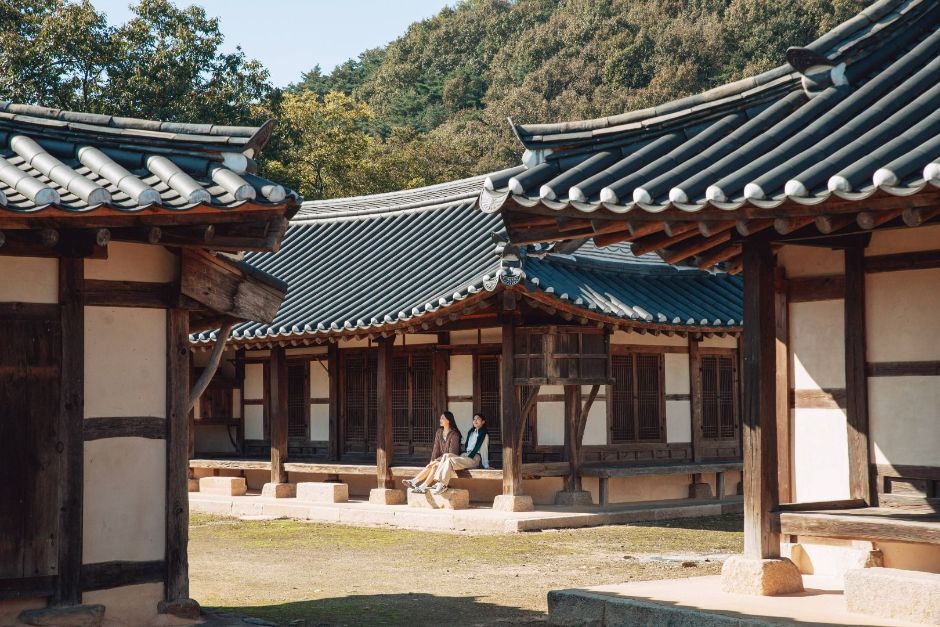
This house, exhibiting the features of a mid-Joseon Dynasty residence, is a typical upper-class home often called the 'ninety-nine-room house,' built by Kim Myeonggwan, the sixth ancestor of Kim Dong-su, in the 8th year of King Jeongjo's reign. Kim Myeonggwan, who came down from Hanyang, selected a well-located site under Cheonghasan Mountain and completed this house over about ten years, with a pond of approximately 30 pyeong in front of the main gate. The house faces southeast, situated with Cheonghasan Mountain at the back and clear waters of the upper Dongjin River flowing in front, representing a typical auspicious site. The Sarangchae (men’s quarter) is the most splendid part of the house, characterized by a detached kitchen, which is unusual. Upon entering the gate of the inner Haengnangchae (servants’ wing), one can see the symmetrical structure centered around the daecheong (main hall). The house has been preserved in its original form in harmony with its surroundings, with an excellent relationship between the size and location of the yard and the flow from the main gate to the inner quarters. Notably, the inner yard provides a cozy feel by combining the U-shaped main quarters’ inner courtyard and a long horizontal yard between the inner Haengnangchae. It has been preserved almost entirely in its original condition without later repairs or remodeling, and the well-organized surroundings harmonize with the house. Its modest structure, architectural originality, and well-maintained dignified appearance of a late-Joseon scholar’s house are highly regarded as valuable research material across multiple fields, including architecture. While folk cultural heritage sites are generally open to visitors, access may be restricted due to personal circumstances of the owners or others.
Jeongeup Gujeolcho Local Garden 〉


Jeongeup Gujeolcho Local Garden is located at a place once called Manggyongdae (望景臺). It was developed as a sports park in 2003 and reborn as Gujeolcho Theme Park in 2006. Currently designated as 'Jeollabuk-do's No. 1 Local Garden,' its name was changed, and attractions such as trails, a plaza, and a suspension bridge have been added. Gujeolcho grows naturally on about 5 hectares within the total 12 hectares of the park area at the uppermost reach of the beautiful Okjeongho. It is loved by nearby city residents as a comfortable place for walking and resting and has established itself as a nationwide photo spot and travel destination with a nature-friendly park atmosphere matching the concept of a 'slow tour with pine forest and gujeolcho.'
このコースなら、ここで1泊すると移動が楽です
コース周辺で移動しやすく、満足度の高い宿を選びました

この都市の他のおすすめ日程
旅行レビュー
旅行のコツをシェアして、SNSも一緒にアピールしましょう。
会員登録して自分のチャンネルも一緒に紹介してもらう
(会員になると、マイページで設定した Instagram・YouTube・ブログのリンクが、あなたのコメントと一緒に表示されます。)
- ✔ あなたが書いたすべてのコメントに、SNSリンクが表示されます。
- ✔ コメントがベストに選ばれると、SNSリンクとともにホームページ上部にも掲載されます。
“「弘大近くに滞在して、夜のカフェ巡りをしました。街の夜景も雰囲気も最高でした。」”
ゲストとして投稿したコメントには、SNSリンクやプロフィールカードは表示されません。
旅行のひとことコメントを書く
この場所についてのちょっとしたコツや感想をシェアしてください。
ゲストとして、気軽にひとことコメントを残すこともできます。
ドラッグ&ドロップ、またはクリックして画像を追加(最大6枚)
まだレビューがありません。最初の感想を投稿してみましょう!