

高山ユンソンドの理想郷を訪ねる
ボギル島は、高山ユンソンドが丙子胡乱の際に仁祖が三田渡で降伏した後、隠遁のために訪れた場所であり、彼の足跡がそのまま残っている。中里、通里海辺だけでなく、丸石の海辺が美しいイェソン里海辺も有する風光明媚な島である。ユンソンドの対立者であったウアム・ソンシヨルが済州島流刑の道中に残した「글씐바위」もあり、皮肉な歴史の痕跡にも触れられる。
この場所はどうでしたか?
このコースは1日旅程のサンプルです。そのまま保存するか、AI日程に拡張できます。

Jungni Beach 〉


Jungni Beach is a beach located right next to Tongni Beach. It features a gentle slope and a beautiful pine forest that serves as a windbreak for the village. A white sandy beach with silky fine sand stretches long, and over 300 pine trees, hundreds of years old, line the beach, surrounding it. The pine forest provides shade from the scorching sun and is good for camping. Facilities such as showers and water fountains are available, and nearby village accommodations and restaurants make it convenient to arrange lodging and meals.
Woam Song Si-yeol Inscribed Rock 〉
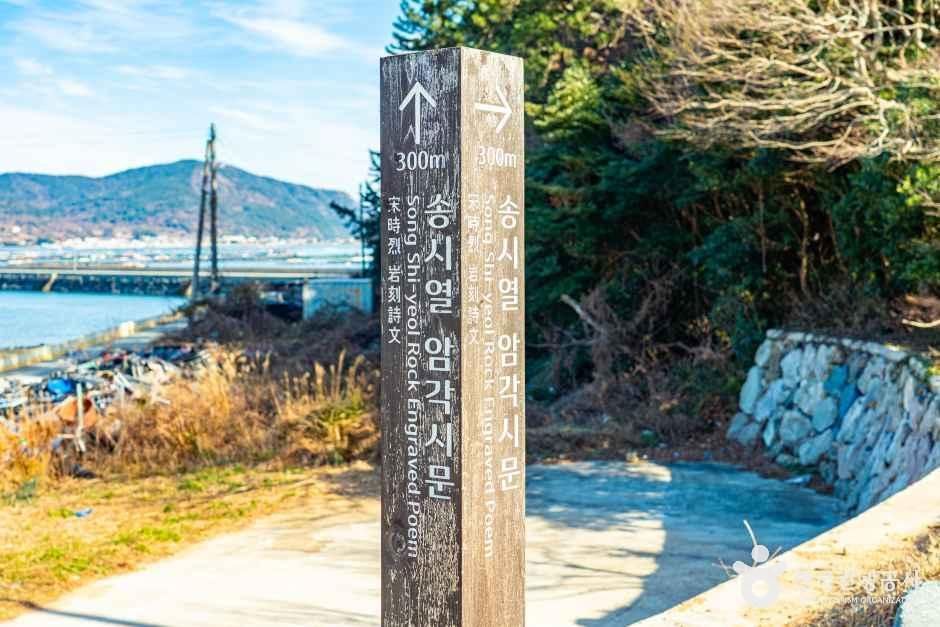
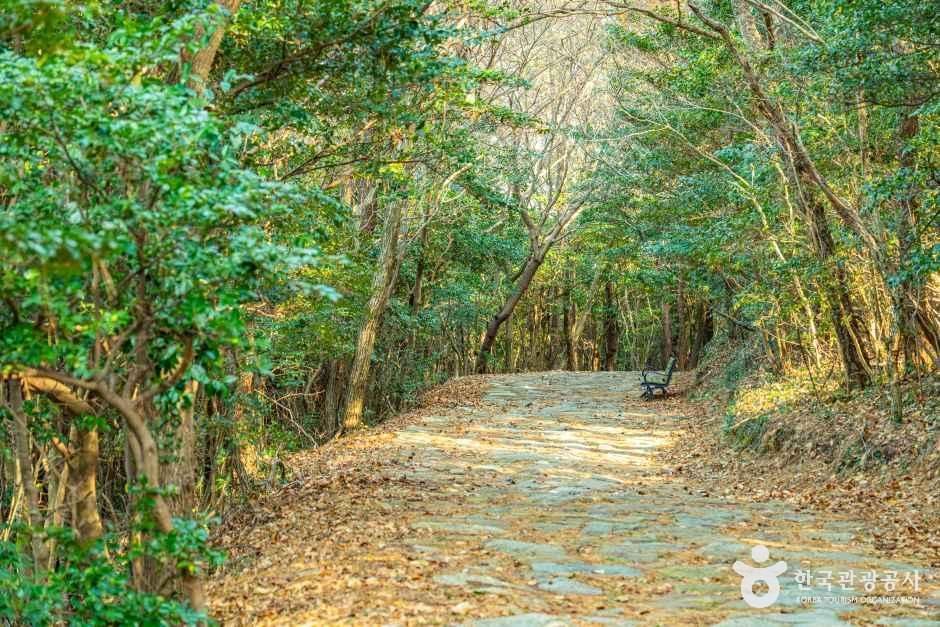
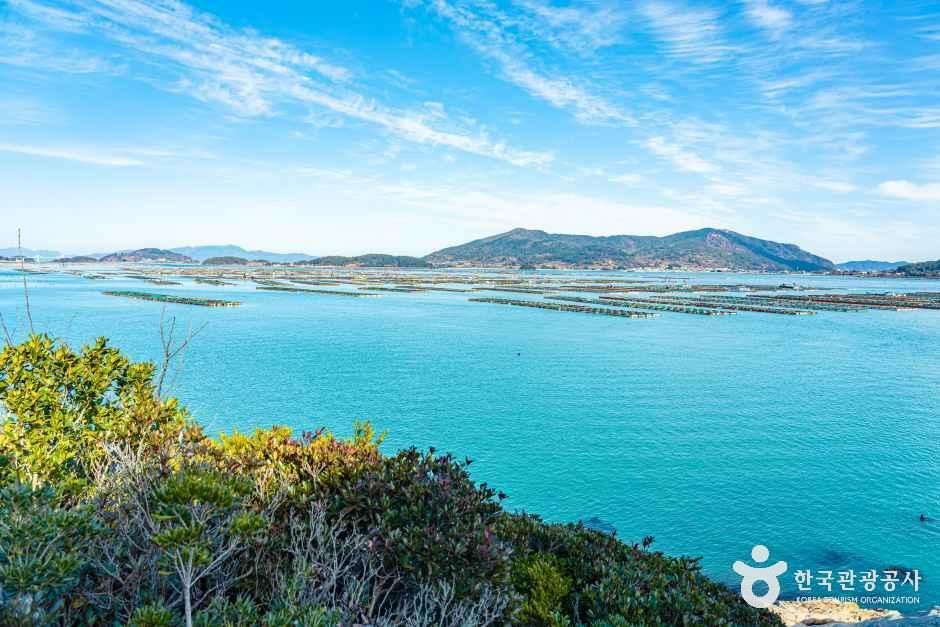
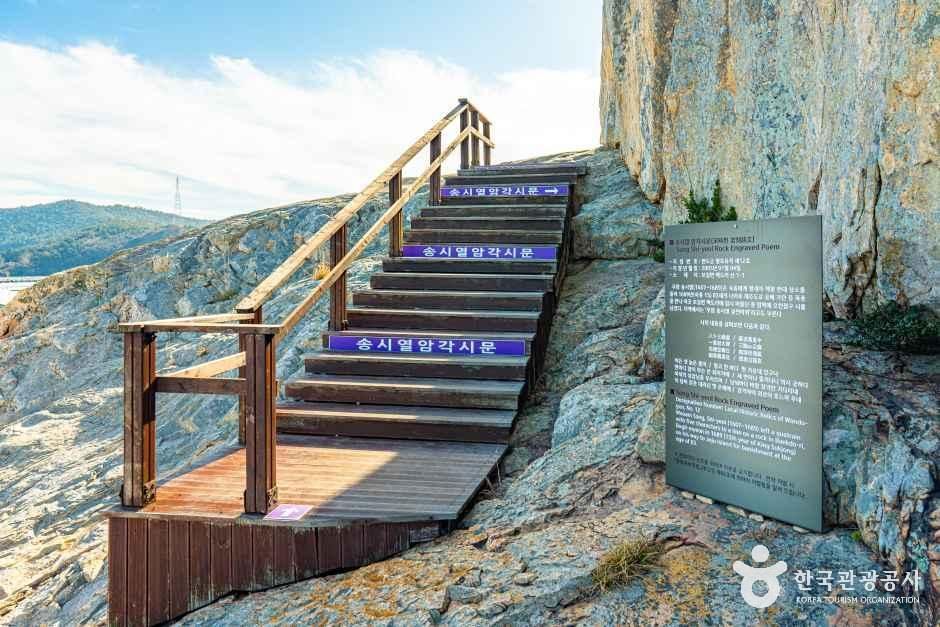
Song Si-yeol Inscribed Rock refers to the cliff by the sea in front of Seonbaekdo Village on Bogildo. Here, Woam Song Si-yeol, a great Confucian scholar from the era of King Seonjo to King Sukjong, who was dismissed from office due to the crown prince investiture issue and exiled to Jeju, took a short rest at this scenic spot, engraved his sorrow and longing for the king as poems on the rock. The local people call it Woam Song Si-yeol Geulsseunbawi. [An 83-year-old old body breaks through the vast waves and travels the sea...] He expressed his lonely situation in a poem engraved on the rock. Later, Im Gwan-ju, a disciple of Woam, visited this place in 1707 while on exile by the same sea route and left a five-character regulated verse titled [Dongguk-ui], which remains to this day. About a 5-10 minute walk through a 300m forest tunnel from the parking lot signposted as Song Si-yeol Rock Engraving, you can meet the open sea and cliff. Standing on this cliff, the aged scholar must have written down his heartfelt feelings. Near the inscribed rock Song Si-yeol gazed upon, the blue sea now hosts abalone farms, offering a unique scene found only here. 八十三歲翁 (Eighty-three-year-old elder) 83-year-old old body 苍波万里中 (In the vast, rough sea I go) 一言胡大罪 (How can one word be such a great crime?) 三黜亦云窮 (Exiled three times, my fate is desperate) 北極空瞻日 (Looking north at the polar sky and sun) 南溟但信風 (Trusting only the southern sea wind) 貂裘舊恩在 (In my robe, the old king's grace remains) 感激泣孤衷 (Moved to tears, I wipe my lonely heart)
Yesong Beach 〉
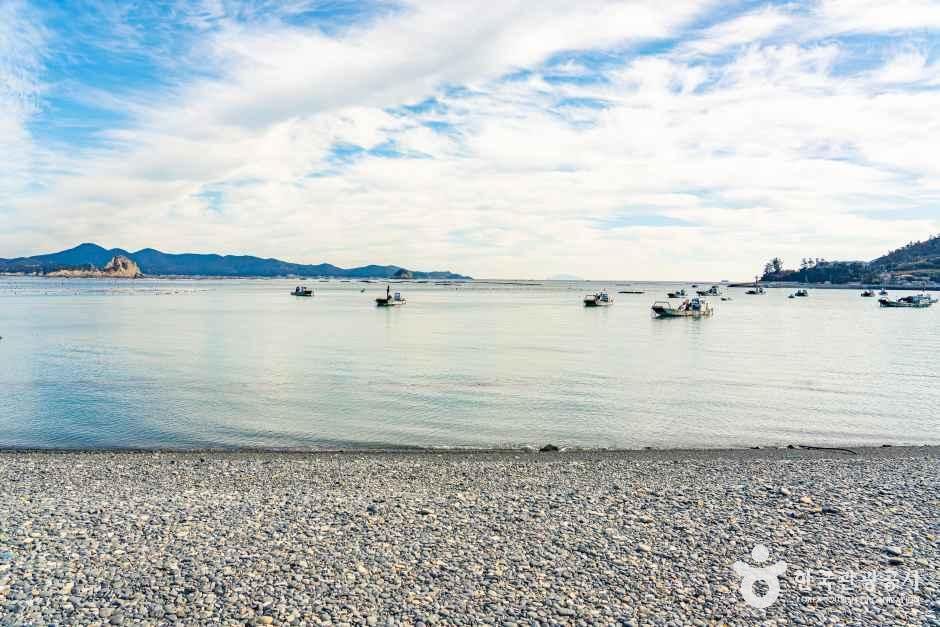
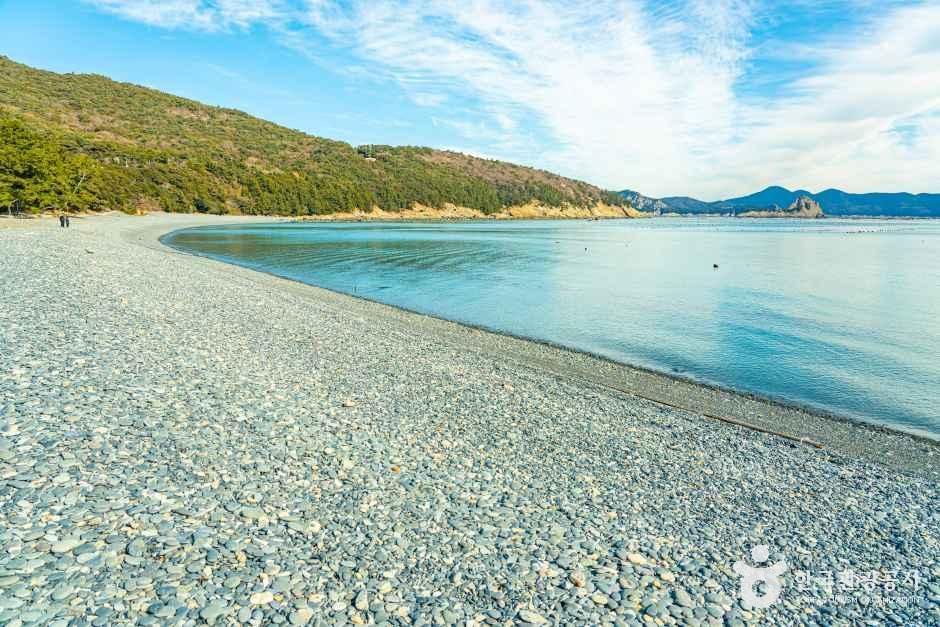
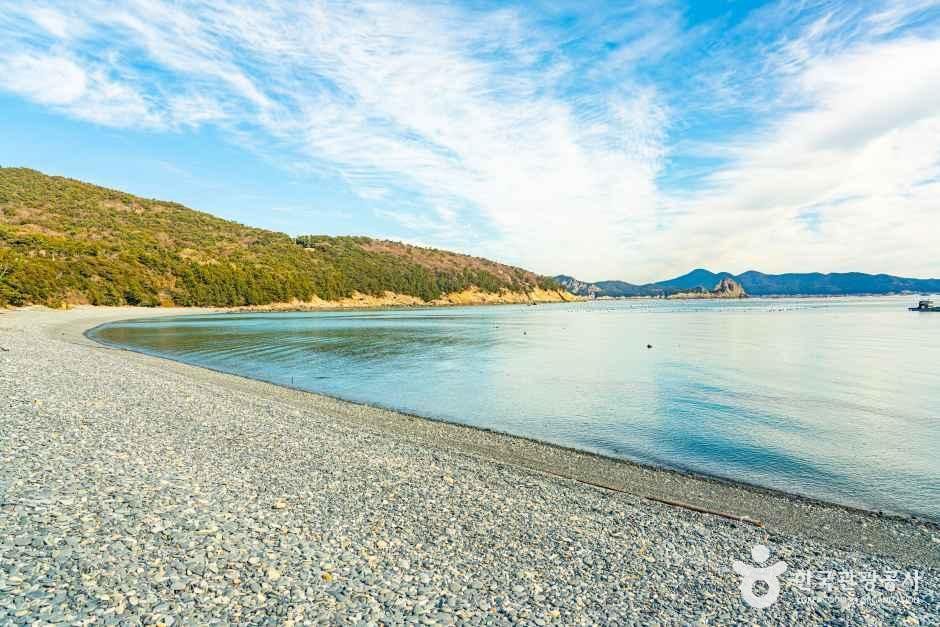
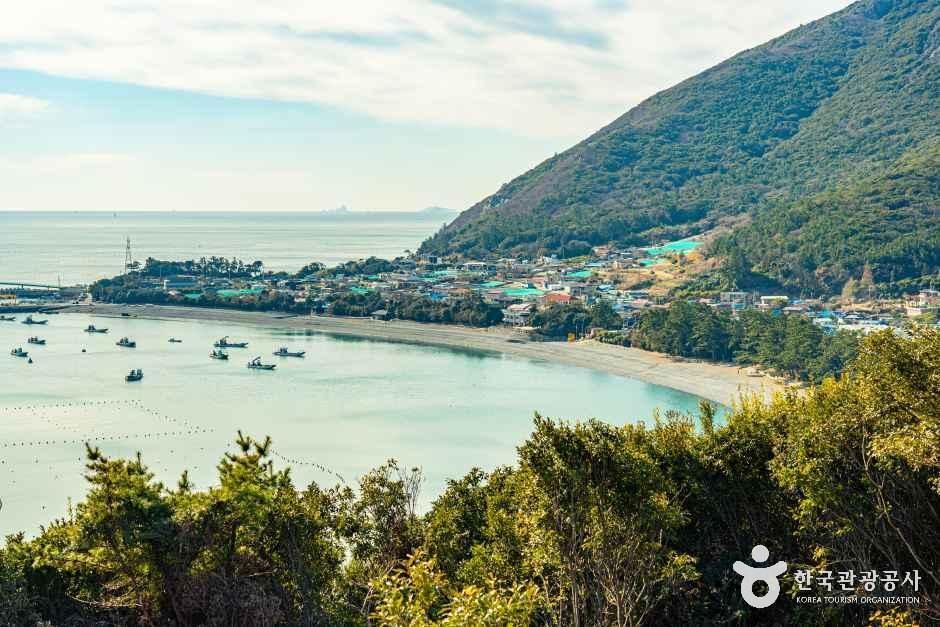
Bogildo, the most beautiful island in Wando, is home to Yesongri Beach. From this beach, one can easily see islands such as Dangsa, Yejak, Dal Island, Gi Island, and Chuja. Yesongri Beach, visited by 300,000 people annually, is a year-round resort with cheonghwanseok (碃環石) extending 50m wide and 2km long. The windbreak forest on the back beach side is Natural Monument No. 40, where more than 30 types of woody and herbaceous plants grow, including pine trees, hackberry, camellia, and bay trees. The pine tree is specially protected as the village's Dangsan tree, and a shamanistic ritual to the sea god is held annually.
Bogildo Seoyeonjeong 〉
★4.5(196)


Gosan Yun Seondo (1587–1671), a mid-Joseon dynasty statesman and poet, reportedly could not contain his anger upon hearing news that the king surrendered during the Byeongjahoran invasion and, on his way to Jeju Island, was moved by the natural scenery of Bogildo and stayed there. Bogildo is where he, at age 51 in the 15th year of King Injo's reign (1631), spent 13 years refining his writing and mind, creating excellent poetry such as 'Eobusasisa.' Bogildo has about 20 buildings constructed by Yun Seondo while he stayed, including Dongcheonseoksil, Nakseojae, Hoesu-dang, Goksu-dang, and Seoyeonjeong, with Seoyeonjeong serving as a space for recreation. Seoyeonjeong means a place where the surrounding scenery is as clean and neat as if washed by water, refreshing the spirit. According to Gosan Yeonbo, it was built in 1637 when Gosan came to Bogildo and discovered Buyongdong. Yun Seondo, awakened by the sound of roosters, would read and teach disciples, and in the afternoons enjoy dances from performers while drinking and dining at Seoyeonjeong. The natural surroundings of Seoyeonjeong were arranged with touches of artificial beauty, and the pavilion was built open on all sides to enjoy the scenery in every direction. It was even equipped with ondol (underfloor heating) for use during winter.
Dongcheon Seoksil 〉


Dongcheon Seoksil overlooks Buyongdong, the immortal world where immortals dwell in Neo-Confucianism, and is located on the hillside facing Nakseojae. In a 3,306m² (about 1,000 pyeong) space, there is a single-room pavilion, stone gate, stone wall, stone stream, stone waterfall, and stone field where people drank tea and composed poetry. Dongcheon Seoksil is named after Dongcheon Bokji (洞天福地), meaning a blessed land where immortals live, as it is situated at the highest point in the area for rest and reading. Lotus flowers were planted in the stone pond, which was divided into two parts with an artificial hole for water flow and a bridge called Heihuanggyo. In front of the stone chamber remain Yongduam, where a pulley was hung, and Chabawi, a rock for boiling tea. It takes about 5 minutes by car from the Yoon Seon-do garden ticket office to the entrance of Dongcheon Seoksil, and then about 20 minutes to climb the mountain to reach Dongcheon Seoksil. On Fridays, Saturdays, and Sundays, a cultural interpreter is stationed at Seyonjeong, so it is recommended to listen to explanations of Dongcheon Seoksil, Goksudang, and Nakseojae during the visit.
Manggeut Observatory 〉
★4.2(311)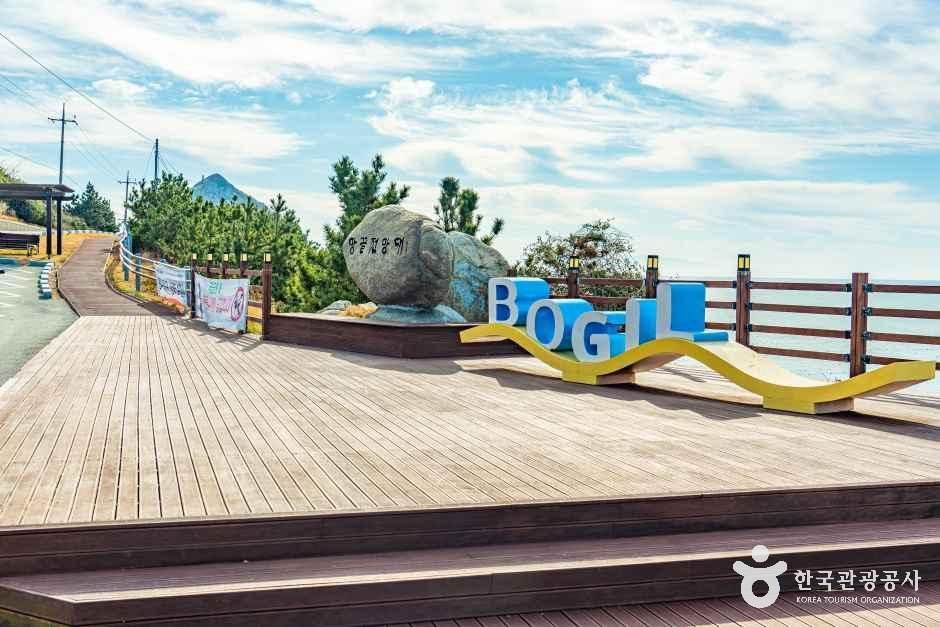
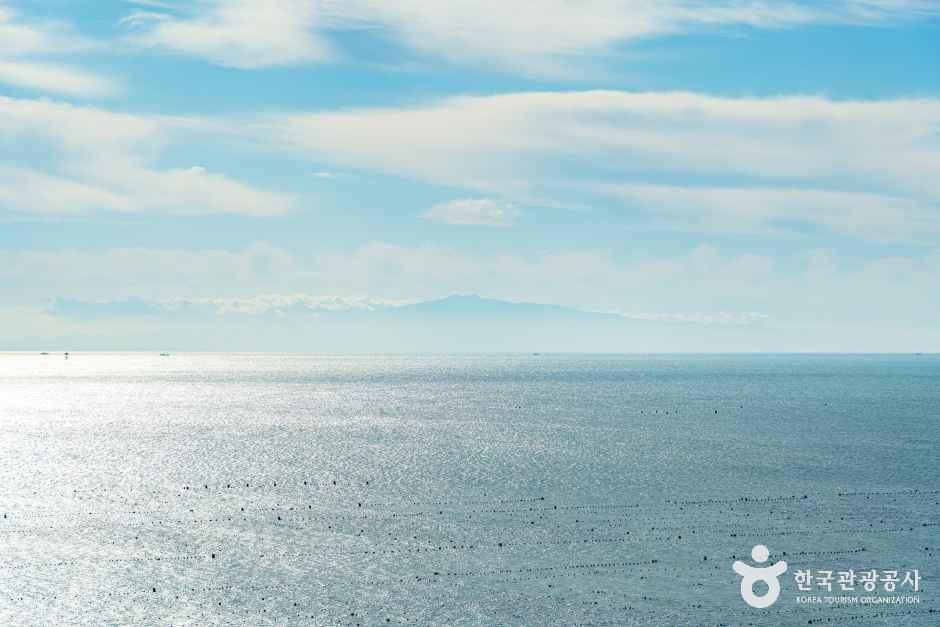
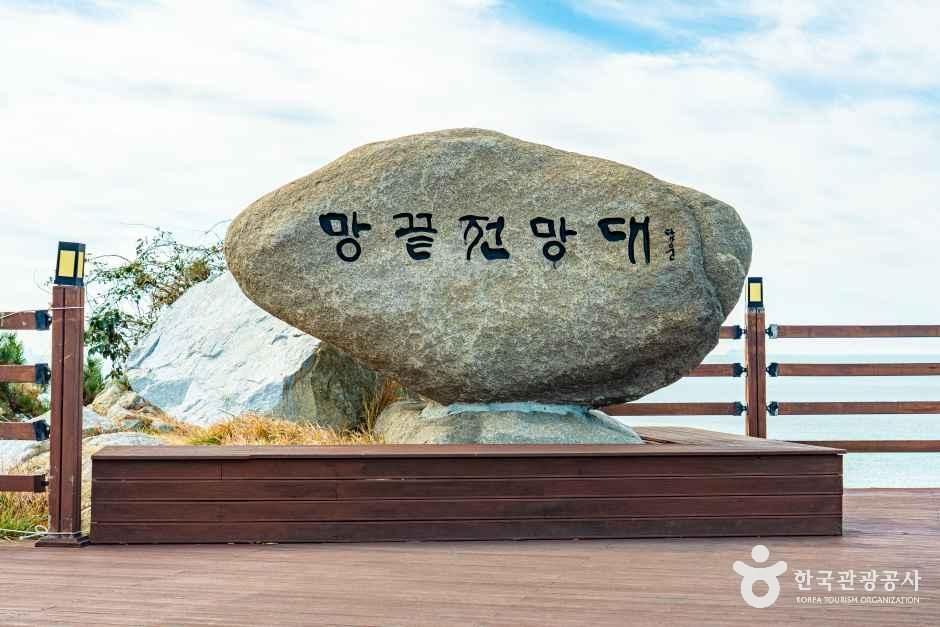
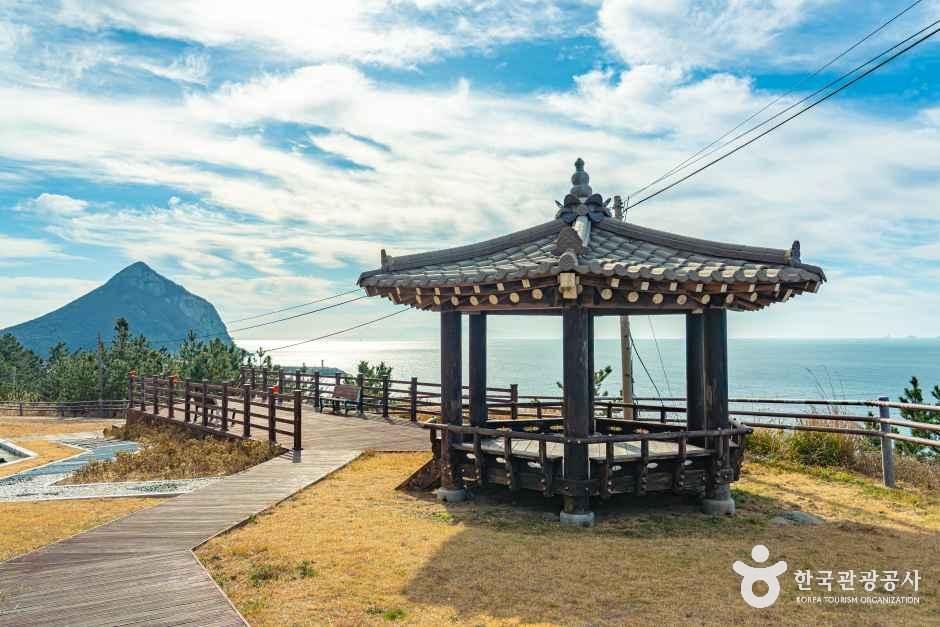
Manggeut Observatory is located on a protruding part at the end of Mangwolbong, just before Bo-ok-ri, the westernmost point of Bogildo. There is a Mangwolbong, where the mountain spirit of Hallasan in Jeju Island was enchanted by the moon's shape spanning the ridges of Bogildo while on an invitation to Jirisan's mountain spirit. This place was called Manggeut, meaning the end of Mangwolbong. From the observatory, a vertigo-inducing sheer cliff unfolds. Manggeut offers the most beautiful sunset in Korea, where the endless, refreshing sea meets the red horizon over the West Sea. The sunset along with the many islands of the Dadohae—the Chuja Islands, Okmae, Gado, Sangdo, and others—before your eyes is an epic poem. On clear days, Jeju Island is visible from Manggeut Observatory.
Bo-ok-ri Dinosaur Egg Beach 〉
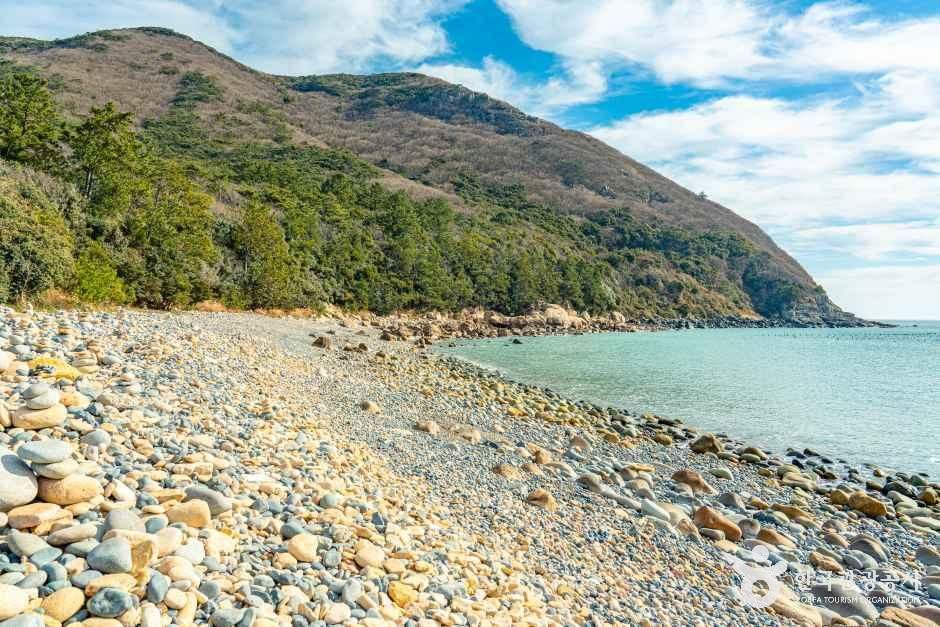
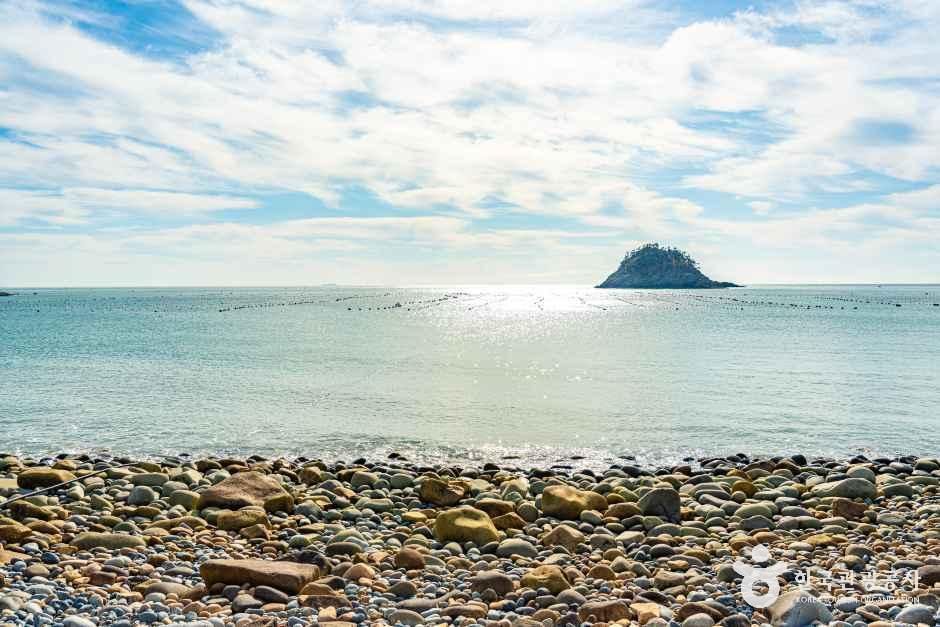
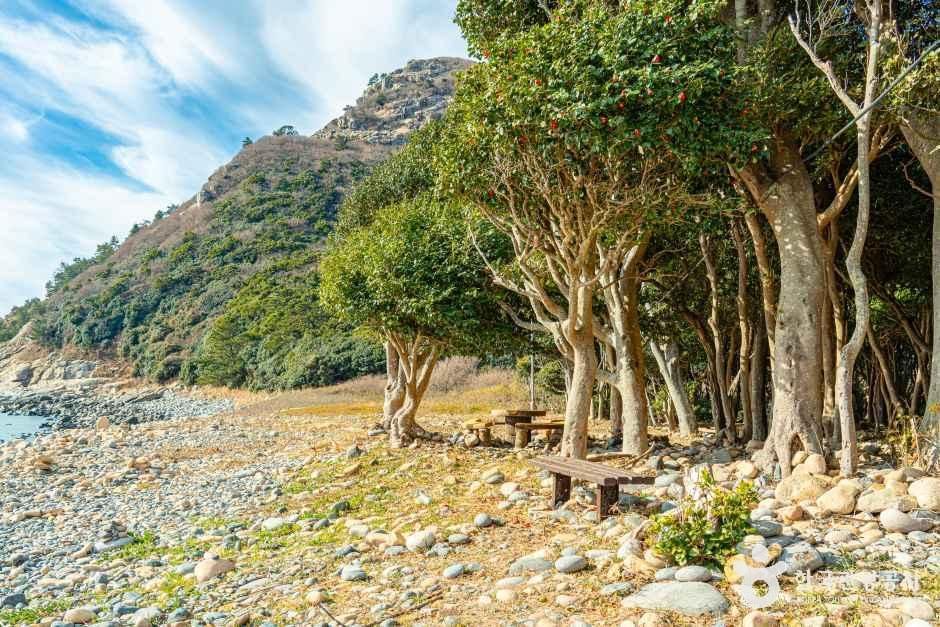
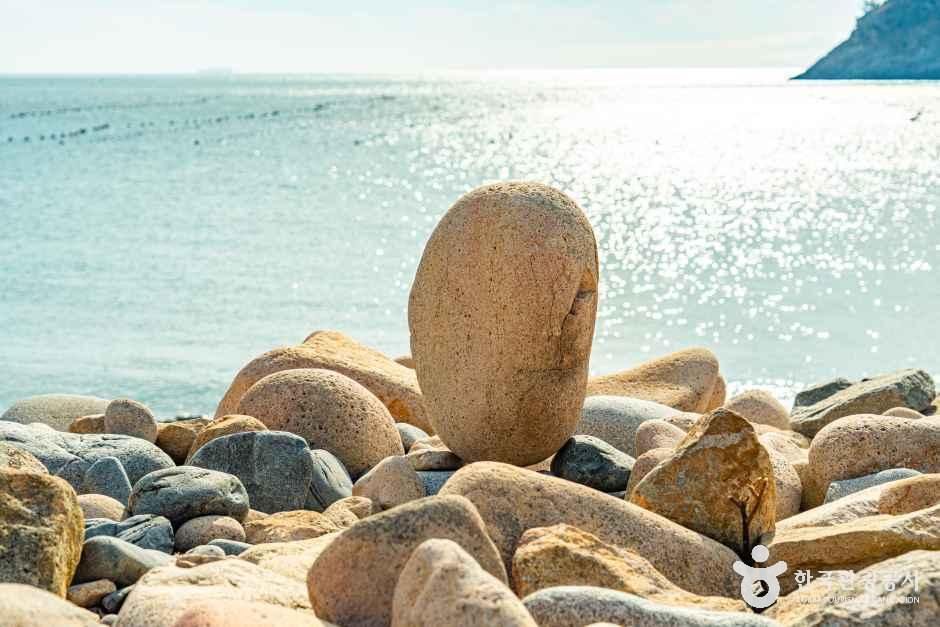
The coastal area under Bojuk Mountain (Ppyojok Mountain), which surrounds the inside of Bo-ok-ri village on Bogildo Island, is called Dinosaur Egg Beach. It is named so because the large, round pebbles resemble dinosaur eggs. Locally, it is also called Pporaegi Pebble Field. It is not a beach for swimming, but you can relax quietly listening to the sound of dinosaur egg stones while sitting in the camellia forest or on the beach, or hike Bojuk Mountain. It is a little-known healing retreat. Since it is a remote area without electricity or convenience facilities, it is recommended to leave after sunset. Alongside the beach is the [Eobusasisia Meditation Trail], a 5.2 km circular path extending to Yesong-ri. This trail is within Dadohaehaesang National Park and preserves the natural terrain, so there are uphill and downhill sections. It is a pleasant walk of about 2 hours and 30 minutes that leaves you feeling pleasantly tired.
このコースなら、ここで1泊すると移動が楽です
コース周辺で移動しやすく、満足度の高い宿を選びました


この都市の他のおすすめ日程
旅行レビュー
旅行のコツをシェアして、SNSも一緒にアピールしましょう。
会員登録して自分のチャンネルも一緒に紹介してもらう
(会員になると、マイページで設定した Instagram・YouTube・ブログのリンクが、あなたのコメントと一緒に表示されます。)
- ✔ あなたが書いたすべてのコメントに、SNSリンクが表示されます。
- ✔ コメントがベストに選ばれると、SNSリンクとともにホームページ上部にも掲載されます。
“「弘大近くに滞在して、夜のカフェ巡りをしました。街の夜景も雰囲気も最高でした。」”
ゲストとして投稿したコメントには、SNSリンクやプロフィールカードは表示されません。
旅行のひとことコメントを書く
この場所についてのちょっとしたコツや感想をシェアしてください。
ゲストとして、気軽にひとことコメントを残すこともできます。
ドラッグ&ドロップ、またはクリックして画像を追加(最大6枚)
まだレビューがありません。最初の感想を投稿してみましょう!