

品味部队锅的历史
部队锅是用美军基地提供的肉类熬制的锅,义政府是其发源地。作为朝鲜战争后成为美军驻地的城市,义政府设有部队锅街,显示了其在部队锅制作上的独特地位。该地还环绕着道峰山、沙佩山和水落山,可以参观道峰山的望月寺以及水落山的西溪朴世堂先生遗迹所在的爱舍。
这个地方怎么样?
这条路线是单日行程示例。你可以直接保存,或扩展为 AI 行程。
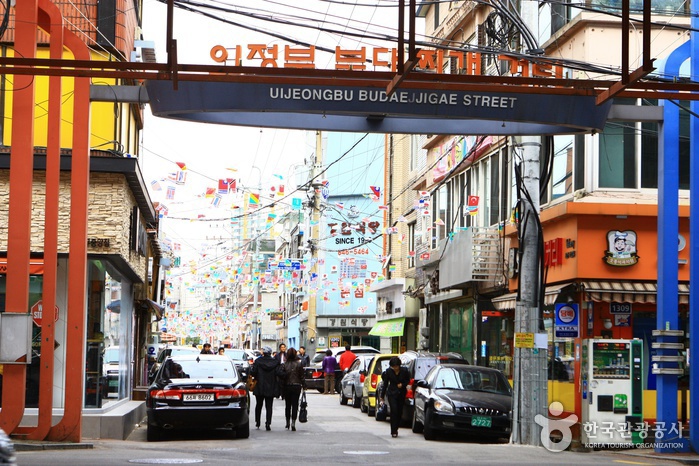
Uijeongbu Budae Jjigae Street 〉


Uijeongbu Budae Jjigae Street is a food specialty street designated and operated as one of the tourism theme alleys, formed by Budae Jjigae restaurants gathered next to the former Yangju county office. The 'budae' in Budae Jjigae refers to the US military base stationed right after the Korean War; it was not a dish eaten by soldiers but started in the area around the US military base. During a time of food scarcity, Western ingredients like ham, sausage, and bacon from the US base were combined with traditional ingredients like kimchi, gochujang, and rice cakes to make a spicy and refreshing stew suited to Korean tastes. The street centers around 'Oden Restaurant,' an early officially recognized origin restaurant by the city, with a total of 12 restaurants gathered, and hosts the Uijeongbu Specialty Stew Food Festival every October. The 2008 comic 'Sikgaek' by author Heo Young-man, also adapted into an SBS drama, featured an episode where the adopted character 'Ted Oh' finds nostalgic flavors in Uijeongbu, depicting the origin of Budae Jjigae and touching on painful aspects of our history, gaining great popularity. Located right in front of exit 2 of Uijeongbu Central Station on the Uijeongbu Light Rail Transit, it has excellent public transportation access; parking varies by restaurant when using a private car, so individual inquiries to restaurants are recommended. Across the street are the Uijeongbu Fusion Culture Tourism Information Center, Haengbok-ro, Uijeongbu Jeil Market, and Uijeongbu Station East Square within walking distance.
점심식사 (보영식당, 고산떡갈비) 〉
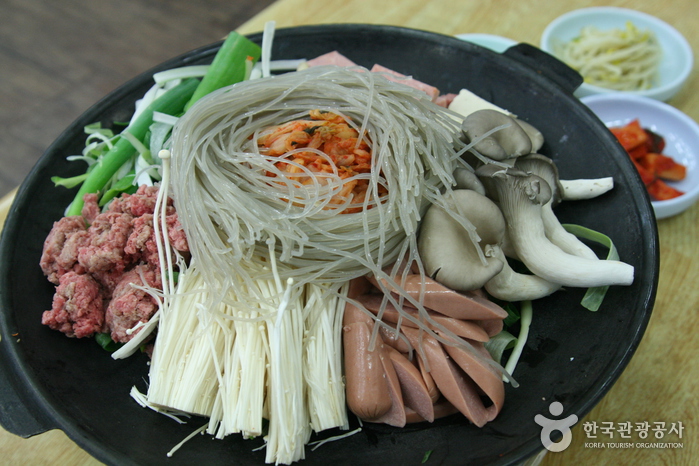
[보영식당] 원조 '부대찌개'. 그러나 이젠 소시지와 햄과 각종 사리가 가득 담긴 영양만점의 찌개로 세대 교체되어 그 명성 역시 가히 전국구라 할 수 있게 되었는데, 그 중에 의정부의 부대찌개는 '의정부찌개'로 불리워질만큼 그 맛을 인정받았는데 이중 가장 대표적인 집중의 하나가 바로 '보영식당'이다. 직접 담근 보리고추장과 김치에서 우러나는 그 속 깊은 얼큰함을 꼭 한 번 맛보길 바란다. [고산떡갈비] 최고 품질의 한우 갈빗살로 만든 떡갈비는 매일 저녁 다음날 쓸 만큼의 양만 칼질해 양념한 후 하룻밤 숙성 시킨 뒤 아침마다 주문과 동시에 석쇠에 구워 기름기는 빠지고 육즙은 풍부해 고기 본연의 맛을 느낄 수 있다. 특히 1979년부터 창업해 대를 이어가고 있다.
Mangwolsan Temple 〉
★4.4(325)

Mangwolsan Temple is located on the beautiful and outstanding Dobongsan Mountain, which features rocky peaks such as Jawonbong, Manjangbong, Seon-inbong, and Jubong. There are two routes leading to Mangwolsan Temple: one course that passes through Daewonsa, Wonhyosa, and Gwangbeopsa sequentially from the ticket office, and another course following the Wondobong Valley. From Mangwolsan Temple, both trails lead to the Podae Ridge. Mangwolsan was founded in 639 AD, the 8th year of Queen Seondeok of Silla's 27th reign, by Monk Haeho under the queen's order to pray for the prosperity of the royal family. The name Mangwolsan was given with the intention of praying toward Wolseong (Moon Castle) in Seorabeol at that time. This place has historically been home to many great monks of the Unsu sect, including Hyegeo and Yeongso from the Goryeo period, and Cheonbong, Yeongwol, and Doam during the Joseon period, as well as Seon sages called Do-in such as Mangong, Hanam, and Seongwol in modern times. To the southwest of the main hall of Mangwolsan is Hyegeo Guksa Budo (a Gyeonggi-do Tangible Cultural Property). Many monks still practice meditation here. A Budo is a stone pagoda housing the relics or ashes of a renowned monk, usually built near a temple. This Budo enshrining Hyegeo Guksa’s relics is an octagonal round pavilion-type pagoda, 3.4 meters tall with a pagoda body circumference of 3.1 meters. The pagoda consists of a pedestal section containing a sphere-shaped body, a roof stone, and a finial. The pedestal includes a three-tiered octagonal base stone 80 cm high, topped by a supporting stone. The pagoda body is spherical, and grooves are carved above the supporting stone and below the roof stone for structural stability. The roof stone was carved from a single stone including the eaves and finial; its drip surface reflects the shape of a wooden temple roof with eight corner decorations. The finial is also made from a single stone and features lotus patterns on the bell-shaped eaves. The owner of the Budo, Hyegeo Guksa, had the family name No and the courtesy name Hongso, and served as a national monk during the Goryeo period, though little is known about his biography.
서계박세당 사랑채 〉
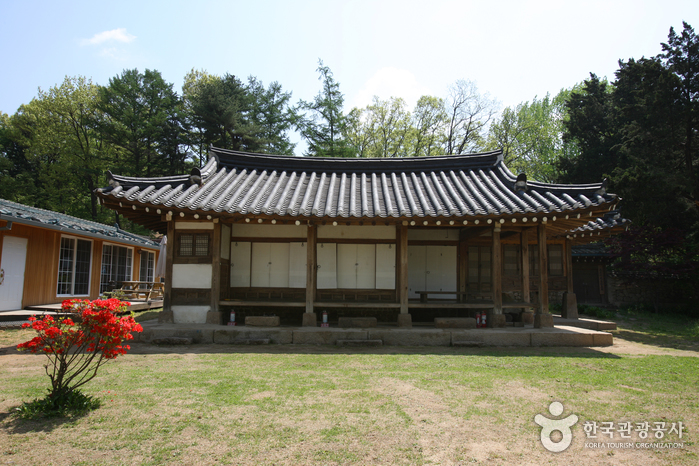
조선 후기 실학자 서계 박세당(1629∼1703) 선생이 저술 활동을 하던 건물이다. 선생은 조선 현종 1년(1660) 과거에 급제하여 여러 벼슬자리에 올랐으나 40세에 관직을 그만두고 이곳에서 학문연구와 후진양성에 힘썼다. 또한 직접 농사를 지으면서 체험한 것을 토대로 그의 대표적인 농학서 『색경』을 저술했다. 처음에는 안채와 안사랑, 바깥 사랑, 행랑채를 갖춘 조선 후기 사대부가의 규모였으나, 한국전쟁 때 대부분 소실되고 현재는 바깥 사랑채만 남아 있다. 사랑채 규모는 앞면 5칸· 옆면 2칸 반으로 누마루가 덧붙어 있어 乙자형 구조로 되어 있다. 사랑채는 동쪽의 수락산을 배경으로 하고 있는 서향집에서 왼쪽을 향하고 있다.
这条路线更适合在这里住一晚
精选了路线周边移动方便、满意度高的住宿


旅行评价
分享你的旅行小贴士,也让更多人看到你的社交账号。
注册成为会员,让更多人认识你的频道。
(成为会员后,在“我的页面”中设置 Instagram、YouTube、博客链接,我们会在你发表的每条评论旁一起展示。)
- ✔ 你发布的每一条评论旁都会显示你的社交账号链接。
- ✔ 如果你的评论被选为「最佳评论」,我们还会在首页顶部突出展示你的留言和社交账号。
““住在弘大附近,晚上去了一圈咖啡馆,城市夜景和氛围都太完美了。””
以访客身份发表的评论,不会显示任何社交账号链接或个人资料卡片
写下一条旅行短评
分享一条关于这个地点的小贴士吧。
或者以访客身份快速留下一个评论。
拖拽或点击添加图片(最多6张)
还没有任何评论,快来写下你的第一条感受吧!