

回到过去,短暂停顿生活的英州之旅
本路线是前往以疗愈旅游地闻名的英州的旅行。保留着古老风情的名胜让人暂时放下忙碌的日常,回望内心。在恢复原貌的后生市场享受充满情感的散步,游览温馨而精致的无岑村和龙脊公园。到达士人村、浮石寺和小修书院时,可以尽情享受宁静自然带来的休憩。
这个地方怎么样?
这条路线是 2 天行程示例。你可以直接保存,或扩展为 AI 行程。
第1天
Museom Village 〉


Museom Village is a traditional village named after the Korean word 'Mulsuri,' meaning an island floating on water. Sometimes, it is also called 'Seomgye Village' due to its resemblance to the terrain of the Seomgye region in China. The village consists of over 40 traditional houses, about 30 of which are Joseon Dynasty noble family residences. Sixteen houses are over 100 years old, preserving the traces of ancestors. The single-log bridge, which was the only route connecting the village with the outside until about 30 years ago, is the village's main symbol. Museom Village hosts festivals and events such as the Museom Single-Log Bridge Festival and cultural heritage celebrations. There are traditional hanok experiences and Museom Cultural Village traditional culture programs. The hanok experience includes visiting the Kim Wook House, Kim Cheonhan House, and Kim Taegil House, where visitors can stay overnight to feel the atmosphere of a hanok. Additionally, the Museom Cultural Village offers various programs such as pottery, dyeing, and Four Gentlemen painting experiences.
Yeongjuho Yongmaru Park 〉


Yeongjuho Yongmaru Park is located in Pyeongeun-myeon, Yeongju-si, Gyeongbuk. The park is divided into Yongmaru Park 1 and Yongmaru Park 2. Yongmaru Park 1 features a visitor center, an observation deck, and a cafeteria. Walking along the trail, crossing the suspension bridges named Yongdugyo and Yongmigyo leads to Yongmaru Park 2. At Yongmaru Park 2, visitors can explore Pyeongeun History. Nearby is the Yeongju Dam Water Culture Center.
선비촌 〉
영주 선비촌은 한국 유교 문화 발상지인 경북 영주 순흥 소수서원과 바로 접하여 위치하고 있으며 선현들의 학문 탐구의 장소 및 전통 생활공간을 재현하여, 우리 고유의 사상과 생활상의 체험 교육장으로 활용하고자 설립되었다.
Sosu Seowon [UNESCO World Heritage] 〉
![Sosu Seowon [UNESCO World Heritage] 1](https://tong.visitkorea.or.kr/cms/resource/76/3499376_image2_1.JPG)
![Sosu Seowon [UNESCO World Heritage] 2](https://tong.visitkorea.or.kr/cms/resource/77/3499377_image2_1.JPG)
![Sosu Seowon [UNESCO World Heritage] 3](https://tong.visitkorea.or.kr/cms/resource/78/3499378_image2_1.JPG)
![Sosu Seowon [UNESCO World Heritage] 4](https://tong.visitkorea.or.kr/cms/resource/79/3499379_image2_1.JPG)
In 1542 (37th year of King Jungjong), Punggi County Governor Joo Se-bung built a shrine to honor Anhyang, and in 1543 (38th year of King Jungjong), it was called Baekundong Seowon as it began educating students. In 1550 (5th year of King Myeongjong), by the request of Punggi County Governor Yi Hwang, it was granted the title 'Sosu Seowon' and officially recognized and supported by the state. In 1544 (39th year of King Jungjong), Anchuk and Anbo were enshrined, and in 1633 (11th year of King Injo), Joo Se-bung was added to those honored. The buildings of the Seowon are arranged relatively freely, likely because it is an early Seowon before the typical layout was established. Entering through the main gate, there is Myeongnyundang lecture hall, followed by Ilsinjae and Jikbangjae dormitories. Unlike the typical symmetrical east and west dormitories flanking the lecture hall, Sosu Seowon is distinguished by the names on the plaques. The shrine is located in a separate walled area northwest of Myeongnyundang. Originally, the site contained Suksusa temple from the Unified Silla period, with remnants such as the dangganjiju (flagpole supports) and stone foundations surviving. Sosu Seowon is one of the 47 Seowon that survived the nationwide abolishment decree by Daewon-gun in the late Joseon Dynasty and continues to hold ancestral rites every spring and fall.
第2天
Buseoksa Temple [UNESCO World Heritage] 〉
![Buseoksa Temple [UNESCO World Heritage] 1](https://tong.visitkorea.or.kr/cms/resource/42/3572442_image2_1.JPG)
![Buseoksa Temple [UNESCO World Heritage] 2](https://tong.visitkorea.or.kr/cms/resource/44/3572444_image2_1.JPG)
![Buseoksa Temple [UNESCO World Heritage] 3](https://tong.visitkorea.or.kr/cms/resource/45/3572445_image2_1.JPG)
![Buseoksa Temple [UNESCO World Heritage] 4](https://tong.visitkorea.or.kr/cms/resource/52/3572452_image2_1.jpg)
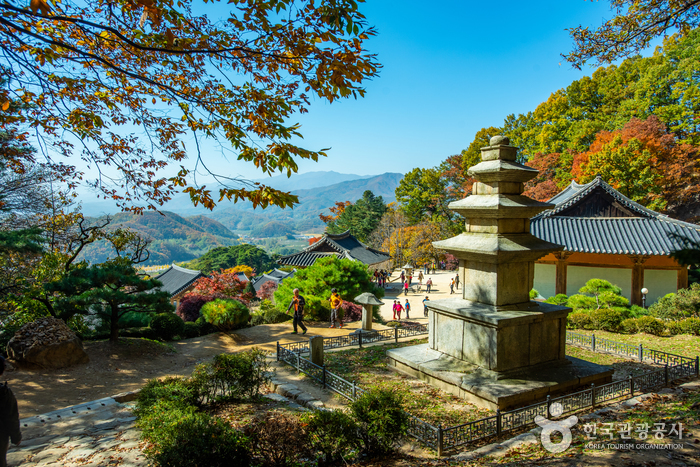
Buseoksa Temple is a head temple of the Hwaeom Sect, founded in the 16th year of King Munmu’s reign in Silla (676) by the sect’s patriarch Uisang Daesa under royal command. While studying in Tang China, Uisang Daesa heard of the Tang emperor's invasion of Silla, reported this to the king, and returned home to unify the national sentiment and overcome hardships through Hwaeom philosophy, founding this temple as the origin of Korea’s Hwaeom thought. The name Buseoksa comes from a large rock west of the Buddha hall that floats without touching the lower rock, called the “floating rock.” In the Goryeo period, it was called Seondalsa or Heunggyeosa Temple. A manuscript found during restoration in 1916 reveals that Muryangsujeon and others were rebuilt in early Goryeo, but were destroyed by fire in the 7th year of King Gongmin’s reign (1358). Muryangsujeon was rebuilt in the 2nd year of King U’s reign (1376), and Josadang in the 3rd year (1377). The temple grounds contain Unified Silla relics such as the stone lantern in front of Muryangsujeon, stone Buddha statue, three-story stone pagoda, flagpole supports, and stone pedestal, as well as Goryeo relics including Muryangsujeon, Josadang, a clay Buddha statue, Josadang murals, Goryeo woodblocks, and the stele of Wonhyungguksa. Notably, Muryangsujeon is one of Korea’s oldest wooden buildings, and the Josadang murals are the oldest known on wooden structures, now preserved in the artifact museum. The Buddha statue enshrined in Muryangsujeon is the finest clay statue in Korea. The well west of Muryangsujeon is said to be where Uisang Daesa’s guardian dragon lived.
전통묵집 〉
태평초는 영주지역에만 있는 음식으로 메밀묵과 돼지고기, 쉰김치, 김이 어우러져 색다른 맛의 별미음식이다. 태평초하면 영주에서 이 음식점을 빼놓을 수 없을 정도로 많은 분들이 찾고 있는 집으로 태평초 외에도 묵밥과 순두부는 이집의 대표메뉴이다. 국산 메밀과 콩을 사용하여 집에서 직접 만든 메밀묵과 순두부를 바로 바로 사용하고 있어 항상 일정한 맛을 유지하고 있으며 순두부는 부드럽고 고소한 맛이 좋으며 간장양념으로 말은 묵밥 역시 영주지역에서만 맛볼 수 있는 색다른 맛이다.
Buyongdae 〉


Buyongdae is a representative tourist attraction of Andong where you can see the entire view of Hahoe Village at a glance. Buyongdae means a lookout point for lotus flowers and is the best place to view Andong Hahoe Village, which resembles a lotus flower. You can enjoy the view of the Nakdong River winding around the village and the Taebaek Mountain Range surrounding Hahoe Village like a folding screen all at once. It is recommended to visit Buyongdae when traveling to Hahoe Village. ◎ Travel information to experience the charm of Korean Wave - It was the place where the cast of variety show Season 16 enjoyed a mat date. After each took their spot by the Nakdong River and opened up, the date ended with taking couple photos with Buyongdae in the background.
这条路线更适合在这里住一晚
精选了路线周边移动方便、满意度高的住宿


该城市的其他推荐行程
旅行评价
分享你的旅行小贴士,也让更多人看到你的社交账号。
注册成为会员,让更多人认识你的频道。
(成为会员后,在“我的页面”中设置 Instagram、YouTube、博客链接,我们会在你发表的每条评论旁一起展示。)
- ✔ 你发布的每一条评论旁都会显示你的社交账号链接。
- ✔ 如果你的评论被选为「最佳评论」,我们还会在首页顶部突出展示你的留言和社交账号。
““住在弘大附近,晚上去了一圈咖啡馆,城市夜景和氛围都太完美了。””
以访客身份发表的评论,不会显示任何社交账号链接或个人资料卡片
写下一条旅行短评
分享一条关于这个地点的小贴士吧。
或者以访客身份快速留下一个评论。
拖拽或点击添加图片(最多6张)
还没有任何评论,快来写下你的第一条感受吧!