

Trip covering history style and taste of Daegu
Daegu, a city filled with history, beauty, and flavor. To see all the tourist sites ranging from the Three Kingdoms period through the Joseon Dynasty to modern history requires more than just a 2-night, 3-day trip. During the day, tour historical sites; at night, enjoy Daegu's beautiful nightscape at spots selected among the Top 100 Night Tourism Destinations. Finish your evening meal with Daegu's local tastes by visiting Gopchang Alley and Dakttongjip Alley.
How was this place?
This course is a sample 3-day itinerary. Save it as-is or expand it into an AI itinerary.
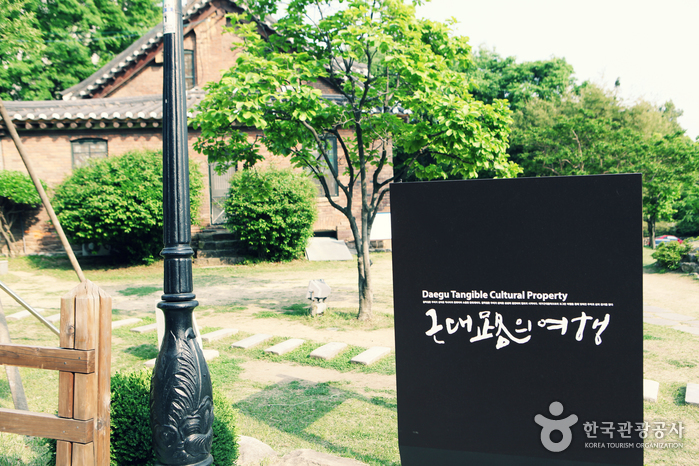
Day 1
Kim Gwangseok Repainting Street 〉


Kim Gwangseok Street is a mural street themed around the life and music of the late Kim Gwangseok, located in the alleys near Bangcheon Market in Daebong-dong where he lived. It was created starting November 2010 as part of the 'Bangcheon Market Munjeonseongsi Project.' Jung-gu Office and 11 artist teams participated. Along the 350m-long wall, murals depict Kim Gwangseok sculptures, him serving noodles at a street food stall, and him looking out to the sea, along with various images and lyrics of his songs. Every autumn, the 'Kim Gwangseok Singing Contest' is held around Bangcheon Market and Dongseong-ro to commemorate him. ◎ Travel info to experience the charm of Hallyu – The drama featured Kim Gwangseok Street, a favorite dating spot for Robin and Hana before their breakup. It is a street where visitors can stroll along the alleys next to Bangcheon Market, viewing various murals themed on Kim Gwangseok's life and songs. The alleys have many cafes and restaurants popular on SNS, making it a favorite dating spot for couples.
Daegu Modern Alley 〉


Modern Culture Alley was selected as a Korean Tourism Star in 2012 and has been listed in Korea's Top 100 Tourist Attractions for three consecutive years, making it one of the most popular spots that led alley tours to become a nationwide tourism content. This alley has many photogenic points at key locations, and travel reviews are actively shared through internet blogs and SNS. It is recognized as a representative tourist attraction that introduced the concept of tourism to Daegu, which was once a tourism desert. When visiting Modern Culture Alley, you can encounter the coexistence of Daegu's past, present, and future and experience a special journey where dialogue, understanding, communication, and empathy between generations occur.
Apsan Cable Car 〉


Apsan Park, where the cable car is located, is Daegu's representative urban natural park. It is situated in a place where you can stroll even in a short time amidst a tiring daily life, making it a beloved resting spot in everyday life. The cable car is located on the trail at Geunggol, where the Nakdong River Victory Memorial Hall is inside the park. Riding the cable car to the summit and seeing the picturesque view of Daegu unfolding before your eyes brings overwhelming emotion. You can breathe in the fresh mountain air in the dense forest, leave daily stress behind, and embark on a journey to regain vitality.
Anjirang Gopchang Alley 〉


Anjirang Gopchang Alley is located midway on the road connecting Anjirang five-way intersection to Ap-san Anjiranggol. It is an alley lined with marinated gopchang (grilled intestines) restaurants that started around 1979 with Chungbuk Restaurant and expanded after the 1998 IMF crisis as more livelihood businesses emerged, continuing to the present. It serves as a place of rest that ordinary people can enjoy without burden and has recently developed into a youth-led vibrant street. In 2012, it was selected as one of the top five food theme streets nationwide under the Ministry of Culture, Sports and Tourism.
Day 2
Daegu Bullodong Burial Mounds 〉


A vast cluster of large burial mounds with bumpy surfaces spread out at the southern foot of Palgongsan. They are estimated to have been created around the 5th century during the Three Kingdoms period. Considered the collective graves of the indigenous ruling power of the region, over 210 burial mounds are concentrated here. Excavated artifacts include gold and gilt-bronze ornaments, iron weapons, and pottery engraved with patterns. The mounds have diameters of about 15 to 20 meters and heights of about 4 to 7 meters. It takes about 1 to 1.5 hours to walk around the site. The gentle ridge is easy enough for children to climb, and beyond the ridge where the burial mounds continue, the cityscape of Daegu can be seen at a glance.
Ayang Train Track 〉


Ayang Train Track was reborn as a new tourist destination in the city by converting the abandoned Ayang Railroad Bridge, which operated as a railroad bridge crossing the Geumho River for 78 years, into a cultural leisure space for citizens, considering its historical and industrial cultural heritage value. The Ayang Train Track is 277m long, 14.2m high, and has a total floor area of 427.75㎡. It features an observatory, gallery exhibition hall, digital bridge museum, and cafe. Its restoration by combining public design with the abandoned bridge was highly praised, earning the German Red Dot Design Award. It is currently popular as a drama filming location. Nearby attractions include the Ten-ri Cherry Blossom Road, Song Monument, Dongchon Amusement Park, and Onggijonggi Happiness Village.
Daegu Pyeonghwa Market Chicken Gizzard Alley 〉
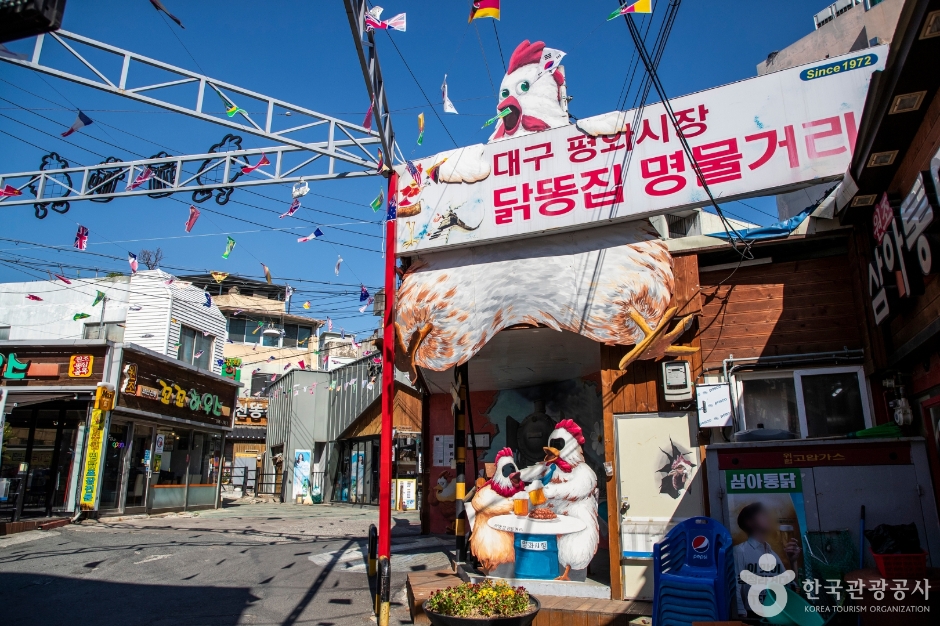

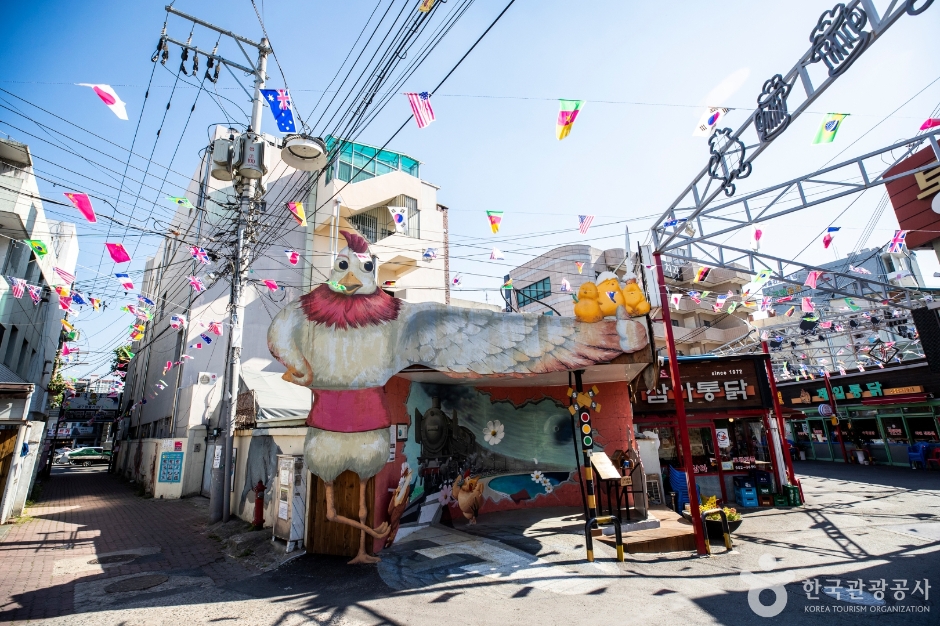

Daegu is the birthplace of seasoned fried chicken and soy sauce chicken, and the center of the Chimaek Festival, which celebrates chicken and beer. The only chicken gizzard alley in the country, Daegu Pyeonghwa Market Chicken Gizzard Alley, has a history of over 50 years and grew alongside the hardships of the working class. In 1972, Sama Chicken sold fried chicken gizzards leftover from cooking as a side dish with makgeolli to the laborers in the nearby manpower market, which became so popular it turned into a regular menu item. This dish, created to comfort poor workers, marked the beginning of the chicken gizzard alley's history. As Sama Chicken's chicken gizzards gained popularity, surrounding restaurants also began selling chicken gizzards, forming the original alley called the Wonjo Alley. In the 1990s, college students with no other local hangout spots came to enjoy the traditional market's tavern atmosphere, affordable prices, and generous portions, making the alley popular and spreading chicken gizzard shops to nearby alleys. In the 2000s, new specialty chicken gizzard places emerged offering soy sauce gizzards, garlic gizzards, and others, making the area famous as a gathering spot for young people who previously only frequented Dongseong-ro. With increased youth visits, various fusion dishes like squid gizzards, shrimp gizzards, and octopus gizzards were introduced. This enduring chicken gizzard alley is a nostalgic place for elders, a street of affordable and delicious food for young people, and a must-visit food alley in Daegu offering tourists a new experience of chicken gizzards. It is conveniently located near Dongdaegu Station, with nearby places such as Dongchon Amusement Park along the Kumho Riverside and the Weather Station Memorial Park providing relaxation spaces to enjoy along with the market's special sensory experiences.
Daegyeonsa Temple 〉


Daegyeonsa, meaning to see greatly, feel greatly, and awaken greatly, is a temple located at the summit of Mt. Biseulsan in Daegu Gwangyeoksi. It is a branch temple of Donghwasa Temple, the 9th district of the Jogye Order of Korean Buddhism. Founded during the early late Silla period under King Heondeok, it is a thousand-year-old temple of Silla. The founders are believed to be King Heondeok and his queen. Monk Il-yeon, who compiled the Samguk Yusa, passed the monk examination in 1227 at age 22 and served as the first head monk here for 22 years, collecting and organizing materials for the Samguk Yusa. The temple was abandoned during the Japanese invasions but flourished again with major reconstructions in 1611 (Gwanghaegun 3rd year) and in the 11th year of King Injo's reign. It declined again in the 18th century. In 1900, Lee Jae-in restored it to celebrate the enthronement of Prince Yeongchin, but it began to fall into ruin in 1908 and was officially abolished in June 1917, leaving only a three-story stone pagoda at the site, which was once called Daegyeonsaji. Reconstruction began in November 2011 by Dalseong-gun and Jogye Order's Donghwasa, completing four buildings including Jeokmyeolbogung, a monks' dormitory, Sanshingak, and wooden wagas by March 2014, restoring Daegyeonsa after about 100 years of abolition. It is one of the temples located above 1000m, along with Bongjeongam of Seoraksan and Beopgyesa of Jirisan, housing the Buddha's true relics (jeokmyeolbogung) instead of statues. The relic enshrined at Daegyeonsa was donated in November 2013 by Donghwasa from Kurukudesa Temple in Sri Lanka and transported here. This relic has been preserved since 103 AD at temples in Sri Lanka and has been enshrined at Kurukudesa Temple since 1881, one of four relics. Recently, the Bodhisattva Precepts Ceremony was held at Geumganggyedan (April 16, 2023). Located at the summit of Mt. Biseulsan, it embraces the Biseulsan Natural Recreation Forest, and in spring, azaleas bloom spectacularly in the royal azalea colonies, creating a magnificent view.
Day 3
Dodong Seowon [UNESCO World Heritage] 〉
![Dodong Seowon [UNESCO World Heritage] 1](https://tong.visitkorea.or.kr/cms/resource/38/2620838_image2_1.jpg)
![Dodong Seowon [UNESCO World Heritage] 2](https://tong.visitkorea.or.kr/cms/resource/39/2620839_image2_1.jpg)
![Dodong Seowon [UNESCO World Heritage] 3](https://tong.visitkorea.or.kr/cms/resource/40/2620840_image2_1.jpg)
![Dodong Seowon [UNESCO World Heritage] 4](https://tong.visitkorea.or.kr/cms/resource/41/2620841_image2_1.jpg)
Dodong Seowon is a seowon dedicated to the Confucian scholar Han Hwendang Kim Gwingpil. The meaning of 'Dodong (道東)' refers to ‘the way of Neo-Confucianism coming from the east.’ It is one of the 47 seowon that were not abolished under Heungseon Daewongun’s 1865 order to close seowon and is considered one of Korea’s five major seowon. In 2019, it was listed as a UNESCO World Cultural Heritage as part of the 'Korean Seowon.' It is the first site in the country whose wall was designated as a Treasure. The 400-year-old ginkgo tree and the view of the Nakdong River flowing beside the seowon recall a scene from an East Asian painting, embodying the spirit of the ancient scholars.
Daegu Dalseong Wetland 〉


Daegu Dalseong Wetland, an inland wetland located across Daecheon-dong and Horim-dong in Dalseo-gu, Daegu, and Dasa-eup and Hwaweon-eup in Dalseong-gun, spans a vast area of 2 million square meters where the Nakdong River, Geumho River, Jincheon Stream, and Daemyeong Stream converge. It was formed over time by repeated sedimentation and formation as rivers flooded long ago. Through nature's self-purification, it blooms with yellow canola flowers in spring, parasite plants in summer, silver grass and reeds in autumn, and attracts migratory birds in winter. Recognized for its outstanding ecological value, it was designated as a wetland protection area and wild fauna and flora protection zone in 2007 and selected as a safe tourism site by the Korea Tourism Organization in 2022.
Daegu Dalseong Wetland 〉
Daegu Dalseong Wetland, an inland wetland located across Daecheon-dong and Horim-dong in Dalseo-gu, Daegu, and Dasa-eup and Hwaweon-eup in Dalseong-gun, spans a vast area of 2 million square meters where the Nakdong River, Geumho River, Jincheon Stream, and Daemyeong Stream converge. It was formed over time by repeated sedimentation and formation as rivers flooded long ago. Through nature's self-purification, it blooms with yellow canola flowers in spring, parasite plants in summer, silver grass and reeds in autumn, and attracts migratory birds in winter. Recognized for its outstanding ecological value, it was designated as a wetland protection area and wild fauna and flora protection zone in 2007 and selected as a safe tourism site by the Korea Tourism Organization in 2022.
For this course, these stays make an easy overnight stop
Selected for easy access around the course and strong guest ratings


More recommended itineraries in this city
Travel Reviews
Share your travel tips & promote your social media.
Sign up to feature your channel.
(As a member, you can add your Instagram, YouTube, and blog links in My Page, and we’ll show them with every comment you write.)
- ✔ Your social media links appear with every comment you write.
- ✔ If your comment is chosen as a Best Comment, it’s also featured on our home page with your social media links.
““Stayed near Hongdae and did a night café tour. Perfect city views and vibes.””
Guest comments do not display social media links or profile cards.
Leave a traveler review
Share a short tip about this place.
Or leave a quick comment as a guest.
Drag & drop or click to add images (up to 6)
No reviews yet. Be the first to share your experience!