

Looking Over Gyeongju from Sacred Namsan
Gyeongju Namsan is not only designated as a national park, but is also an essential course for exploring Gyeongju's cultural heritage, so much so that there is a saying, “Do not talk about Gyeongju without climbing Namsan.” Passing Oreung, Najung, Poseokjeong, and Samneung, you ascend to the summit while encountering the Buddhist land of Silla created on Namsan. It is a path to experience the essence of Buddhist culture that the Silla people, wishing for the Pure Land, have refined over a thousand years.
How was this place?
This course is a sample one-day itinerary. Save it as-is or expand it into an AI itinerary.

Gyeongju Oreung 〉


Located in Tap-dong, Gyeongju-si, this site consists of four mounded tombs and one circular tomb. It was designated a historic site on August 27, 1969. The internal structure is unknown, but the tombs’ external appearance is similar to other Three Kingdoms period Silla tombs in Gyeongju, round mounded tombs made by piling earth. Tomb No. 1 is the largest, with a height of 10m; Tomb No. 2 is gourd-shaped and has two burial mounds for two people. Such large circular mounded tombs appeared in Silla after the 4th century and are not from the era of Park Hyeokgeose. According to the Samguk Sagi, it is the burial site of Park Hyeokgeose, the founder of Silla, his queen Alyeongbuin, and three early Silla kings of the Park clan: the 2nd King Namhae, the 3rd King Yuri, and the 5th King Pasa. The Samguk Yusa records that after Park Hyeokgeose died, his body scattered into five parts seven days later, and his queen died soon after; people tried to bury them together, but a large snake interfered, so the five parts were buried separately. This gave rise to the names Oreung (Five Tombs) or Saryeong (Snake Tomb). To the east of the Oreung is Sungdeokjeon, which houses the memorial tablet of the founder king, and behind it is Alyeongjeong, preserved as related to Queen Alyeongbuin’s birth.
Gyeongju Najung 〉


This is a well that holds the legend of Park Hyeokgeose, the founder of Silla, being born here. It includes a commemorative monument for Park Hyeokgeose, as well as octagonal building remains, a well site, remnants of a wall, subsidiary building sites, and drainage channels. Particularly, the octagonal building site is estimated to be 8 meters on each side and surrounded by a square fence, believed to be the site of the Silla shrine, and this Najung is presumed to be a temple where Park Hyeokgeose was worshiped. The Samguk Sagi and Samguk Yusa contain the following records about Najung: When the village leaders of the six clans who played a main role in founding Silla gathered to elect a ruler and decide the capital, they climbed a high place. Near a well called Najung below Yangsan, a strange energy appeared, and a white horse knelt. When they approached, the white horse ascended to the sky, leaving only a large red egg behind, which hatched a young boy. Wondering at this, they bathed him in Dongcheon; his body shone, and birds and beasts danced around, shaking heaven and earth, making the sun and moon clear. Because he was born from a gourd-shaped egg, his surname was Park (朴), meaning brightness, and he was named Hyeokgeose (赫居世), meaning to brighten the world. When the boy turned 13, in 57 BC, he rose to the throne, establishing the kingdom and naming it Seorabeol.
Gyeongju Poseokjeongji 〉


Poseokjeong, located west of Namsan in Gyeongju, was one of the royal villas prepared for the king to enjoy drinking, but currently only the water channels for pleasure remain, with no pavilion left. Its creation date is considered to be during the reign of Silla's 49th king, Heongang (875–886). The scale is about 35 cm wide, an average depth of 26 cm, and a total length of about 10 m. Poseokjeong originated from the Chinese ancient riverside event, Yusang Goksuyeon, which was a ritual to invite spirits and drive away evil spirits. In the 353 AD piece Nan-jeong Seo-mun by Wang Xizhi, clear stream water flowed through nine bends where floating cups of liquor would drift, and poems had to be composed before the cup passed all nine bends; otherwise, one had to drink three penalty cups. The surroundings of Yusang Goksu included high, rugged mountains, forests, bamboo groves, and a clear stream. Likewise, in Silla, Poseokjeong was built with the rugged Namsan peaks behind it, dense bamboo and pine forests, and a clear mountain stream flowing through the valley. Originally, at the entrance where the Namsan valley water entered, there was a large turtle-shaped stone that let water flow out, but it is now lost, so its exact form is unknown. The Samguk Yusa records that King Heongang came here and created the Eomusangsim dance following the Namsan spirit's dance. This place was also a beautiful location for cultivating the human mind, for Hwarang to train their spirits, compose poetry, and feel detachment from worldly desires. In 927, King Gyeongae of Silla held a feast here but was attacked by Later Baekje's Gyeon Hwon, captured, and committed suicide, marking a humiliating place in Silla's thousand-year history. The Hwarang Segi manuscript refers to Poseokjeong as Poseoksa (鮑石社), and in 1998, many relics were excavated 50 m south, revealing a large building existed here. Ritual vessels believed to be used in ceremonies were also found, suggesting that Poseokjeong was not only a place for feasting but also a sacred site for national peace rituals. The Poseokjeongji visitor center at the entrance offers models and videos to help understand Poseokjeong.
Gyeongju Baedong Stone Seated Buddha Triad 〉


Originally scattered on the southern foot of Gyeongju Namsan, these statues were gathered and erected in their current location in 1923. These stone Buddha statues share a basic design, indicating they were originally enshrined as a triad (Samjonbul). The central main Buddha has a topknot-shaped head (yukgye), uniquely double-layered with a smooth surface. The square face of a child’s expression is plump, with round eyebrows, downward-slanting eyes, a closed mouth, deep dimples, and chubby cheeks, expressing a gentle and compassionate Buddha nature (Bulseong). The cylindrical body lacks a neck, with large hands carved—the left hand down and the right hand raised. The heavy-looking robe gives the statue a firm appearance overall, but the childlike expression and physique vividly convey warm life. The bodhisattva on the left wears a crown and smiles fully, twisting a slender waist to create a three-dimensional effect. The right hand is placed on the chest, and the left holds a treasure bottle (bobyeong); along with a small Buddha carved on the crown, this identifies the bodhisattva as Avalokitesvara (Gwaneumbosal). The bodhisattva on the right also depicts a serene inner smile; the body is heavily fashioned and adorned from the thick necklace to the ankle with bead decorations. This masterpiece, with its skillful carving, personable face, and body, radiates human warmth yet profound religious mystique, and is regarded as a representative 7th-century Silla Buddhist statue.
경주 배동 삼릉 〉
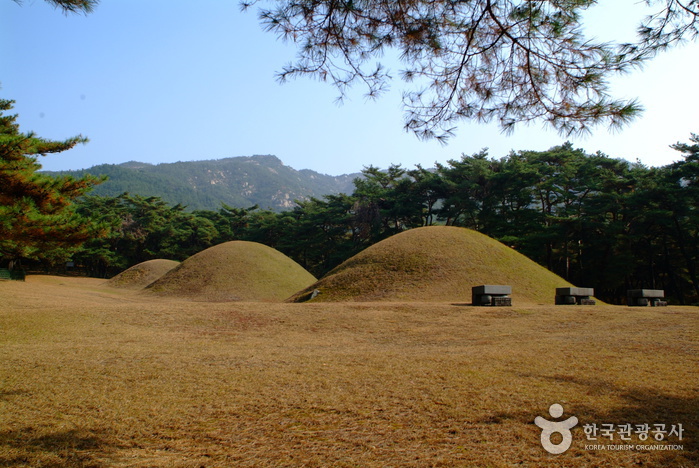
이곳에는 신라 제8대 아달라왕(阿達羅王), 제53대 신덕왕(神德王), 제54대 경명왕(景明王)의 무덤이 한곳에 모여있어 삼릉이라 부른다.
Gyeongju National Park 〉
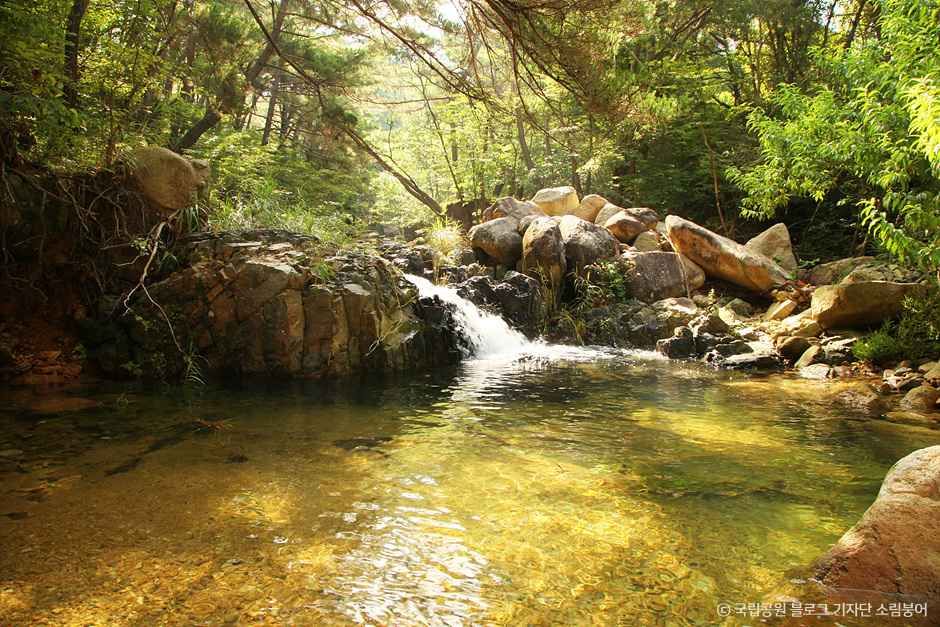
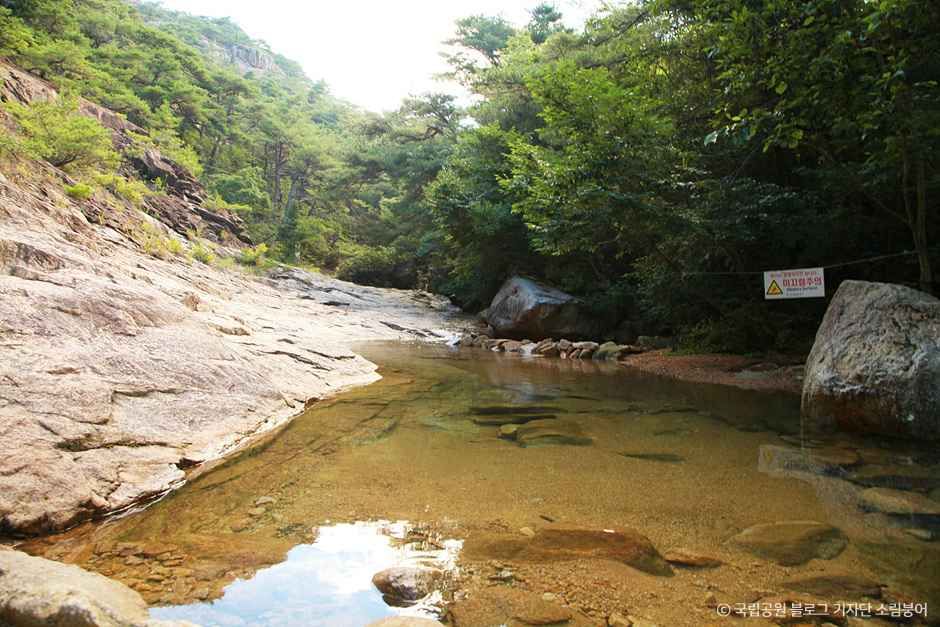
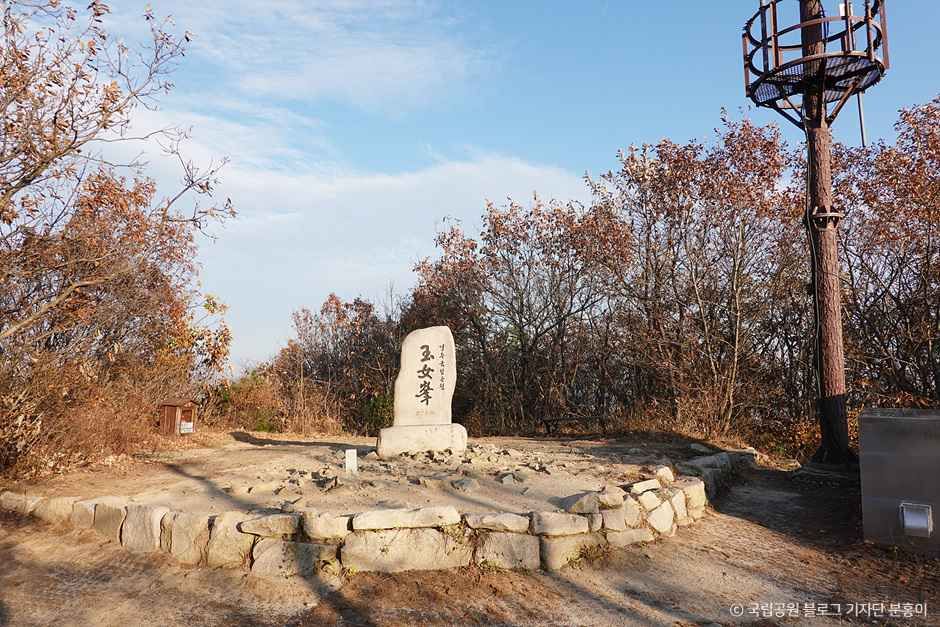
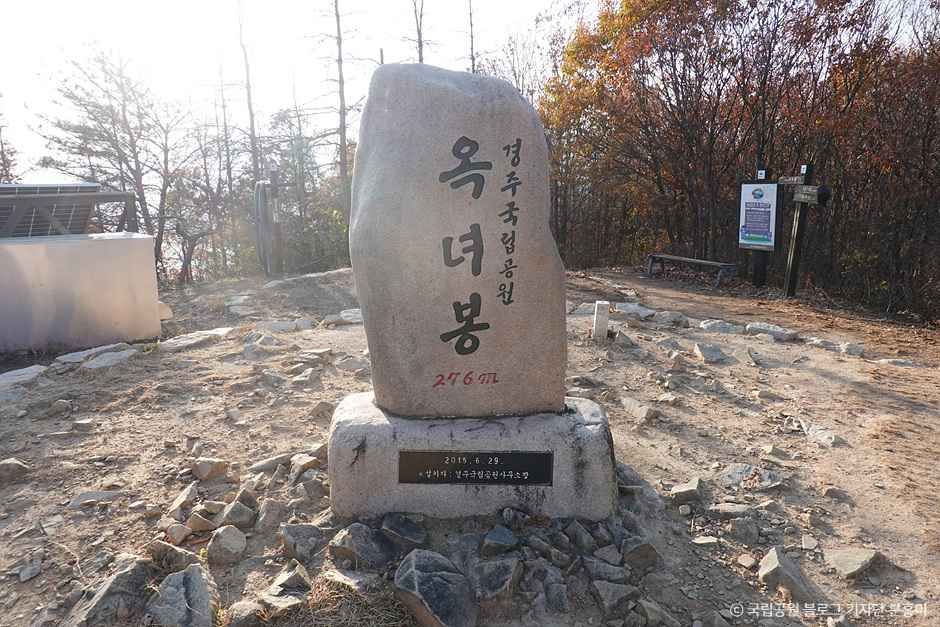
Gyeongju National Park is a national park composed of world-renowned cultural heritage rather than natural landscapes such as mountains or seas, like Seoraksan National Park and Hallyeohaesang National Park. Gyeongju, where the brilliant culture of Silla's thousand years blossomed, is a representative place of Korean tourism preserving numerous cultural heritages such as scenic spots, legends, and indigenous customs that reflect the splendid national culture left by our ancestors and the majestic spirit of the unification of the Three Kingdoms. Outstanding historical sites and cultural and historical relics are astonishingly concentrated in one area, with many national treasures or globally valuable archaeological artifacts unearthed. Gyeongju, where the brilliant Buddhist culture and its arts can be confirmed, is, in short, an open-air museum of an entire city. Especially since Gyeongju-si was designated as a special tourism zone, the public and private sectors have collaborated to improve tourism infrastructure and the environment, transforming it into a more excellent tourist region than ever before, attracting over five million visitors annually.
Gyeongju Namsan Yongjangsagok Three-story Stone Pagoda 〉

The Yongjangsagok Three-story Stone Pagoda is a three-story pagoda from the Silla period of the Later Three Kingdoms, located on Yongjangsa in Yongjangsagok, Namsan, Gyeongju-si. Yongjangsa is well known as the place where Maewoldang Kim Si-seup stayed while writing , and currently only a few stone walls remain, suggesting the site of the temple. This pagoda stands on a high peak of the eastern rocky mountain range surrounding the temple, built on a two-tiered base. The lower tier is natural rock, with the upper tier base placed directly on it; thus, the natural rock may be considered the lower base, or the entire rocky mountain below may serve as the lower base. The upper tier base is finished with pillar carvings at the four corners and center, covered with two slab stones. The body of the pagoda and the roof stones are made from separate stones. The first tier body stone is quite tall, while from the second tier upwards the size decreases sharply. The roof stones have four layers of supports underneath and the eaves form straight lines, gracefully rising at the corners. The top finial is missing, with only a hole remaining where a metal rod was inserted. The pagoda, which had fallen over, was rebuilt in 1922, but the relic container has long since disappeared. It is a representative work of the late Unified Silla period, beautifully harmonized in its proportions and strikingly integrated with the surrounding nature.
For this course, these stays make an easy overnight stop
Selected for easy access around the course and strong guest ratings


More recommended itineraries in this city
Travel Reviews
Share your travel tips & promote your social media.
Sign up to feature your channel.
(As a member, you can add your Instagram, YouTube, and blog links in My Page, and we’ll show them with every comment you write.)
- ✔ Your social media links appear with every comment you write.
- ✔ If your comment is chosen as a Best Comment, it’s also featured on our home page with your social media links.
““Stayed near Hongdae and did a night café tour. Perfect city views and vibes.””
Guest comments do not display social media links or profile cards.
Leave a traveler review
Share a short tip about this place.
Or leave a quick comment as a guest.
Drag & drop or click to add images (up to 6)
No reviews yet. Be the first to share your experience!