

Seohaerang Trail Jindo and Mokpo section
Seohaerang-gil is a total of 1,800 km of trail starting from the southernmost village Haenam to Incheon Ganghwa. Walking through Ssanggyesa Garden, a habitat for birds, trees, and wind, and the autumn leaf paths, you encounter nature as it is. Following the path connected by Seohaerang-gil, you can experience Gohado filled with the sound of the sea, Sebang sunset where you can see the sun setting between islands at sunset, and the street of Mokpo Modern Culture, now a path of the past.
How was this place?
This course is a sample 4-day itinerary. Save it as-is or expand it into an AI itinerary.
Day 1
Ssanggyesa Temple 〉
★4.2(89)


Located on Cheomchalsan in Jindo-gun, this temple was founded by Doseon Guksa during the Silla era and named Ssanggyesa because a valley flows on both sides of the temple. Ssanggyesa is a subsidiary temple of Daeheungsa, the main temple of the 22nd district of the Jogye Order of Korean Buddhism. The establishment date of Ssanggyesa's Daeungjeon was confirmed as 1697 through an inscription found during the 1982 restoration. Upon entering the temple through the iljumun gate, visitors pass ginkgo tree-lined paths and stone walls. Main buildings are built on stone terraces at the foot of Cheomchalsan, following late Joseon architectural style. A 10-minute hike behind the temple leads to an evergreen forest with over 50 species designated as a natural monument. Ssanggyesa is Jindo's oldest temple, valued culturally and environmentally preserved, serving as an excellent resting place. Cheomchalsan mountain, where Ssanggyesa is located, is also a sightseeing highlight. Nearby Unrimsanbang is part of the Seohaerang Trail Jindo Course 8.
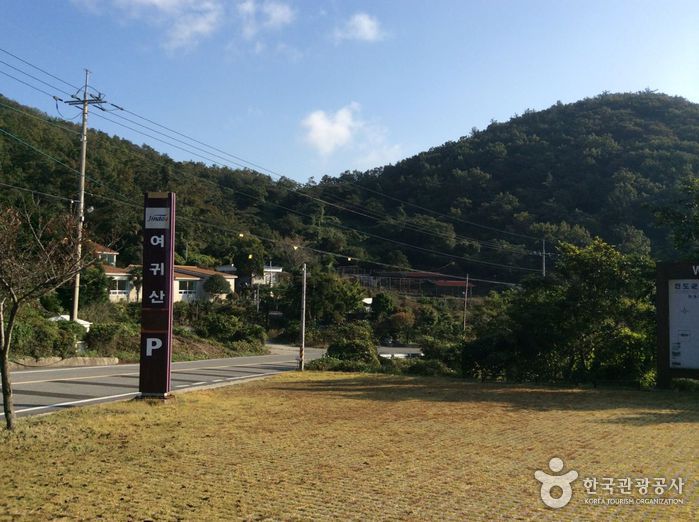
여귀산 〉
여귀산(해발 457m)은 계집여(女)와 귀할귀(貴)자를 사용하고 있으니 쉽게 귀한 여자라는 뜻으로 해석된다. 산 이름이 그래서인지 이 산을 남쪽이나 북쪽에서 올려다 볼 때 정상과 작은 여귀산으로 불리우는 뾰족한 봉우리가 마치 여인의 젖무덤처럼 느껴지기도 한다. 여귀산은 북동쪽에 위치한 첨찰산과 직선 거리로 약 12.5km 거리를 두고 능선이 연결되어 있다. 첨찰산에서 여귀산 방면인 서쪽으로 연결되는 산릉은 첨찰산에서 수리봉(381m)을 지나 왕고개에서 잠시 가라앉았다가 남쪽으로 휘어져 의신면 칠전리와 침계리 경계를 이루며 남진한다. 왕고개에서 남진하는 산릉은 약 5km 거리에서 임회면과 의신면 경계를 이루기 시작하는 221m 봉을 지나 약 3km 더 흘러 내리다가 192m봉에 이르러 남서쪽으로 휘어져 313m봉에서부터 산릉을 들어올리기 시작 작은 여귀산과 여귀산을 빚어 놓고 있다. 여귀산에는 산릉을 남서쪽으로 계속 이어져 상만리를 지나 연대산(149m)에 이른 다음 해안가를 따라 북서쪽으로 방향을 틀어 희여산(270m)~비차산(174m)을 지나 지산면으로 들어가 북으로 치달으며 지력산(325m)과 동석산(240m)을 들어 올리고 그 여맥을 바다속으로 가라앉힌다. 여귀산은 두 얼굴을 가진 산이다. 정상은 제법 오르기가 험난한 바위지대로 이뤄진 반면 정상을 중심으로 좌우로 흘러내린 지능선들은 부드러운 산세를 이루고 있기 때문이다. 또한 밖에서 올려다본 여귀산은 어느 방향으로든지 쉽게 오를 수 있을 것으로 보이지만 산으로 들어서면 수림이 워낙 빽빽하게 들어차 있어 기존 등산로를 벗어나서는 육지의 여느산과 달리 수림지대를 뚫고 나아가기가 어렵다. 그러나 일단 주능선이나 정상에 오르면 남서쪽 아래로 시원하게 터지는 다도해해상국립공원을 비롯한 바다풍경이 황홀하게 파노라마를 펼치고 있다. 이 산에서는 바다를 주홍빛으로 물들이는 일출과 낙조가 일품이다.
Day 2
Sebang Sunset Observatory 〉
★4.7(26)


The scenery of the archipelago viewed from the 'Sebang Sunset Observatory,' said to be the most beautiful on the Jindo coastal road, is stunning. The sunset seen here is fantastic. At dusk, the spectacular sunset sinking between the islands dyes the surrounding blue sky a redder color than autumn leaves. The Central Meteorological Observatory even selected this as the 'best sunset viewing spot' in the southernmost part of the Korean Peninsula. This coastal road is the best archipelago drive course in Korea, offering panoramic views of the beautiful islands of the archipelago. You can enjoy driving while breathing the fresh air exhaled from many forests and clean seas.
고하도 전망대 〉

고하도전망대는 이충무공이 명량대첩에서 승리 후 전열을 가다듬었던 고하도에 13척의 판옥선 모형을 격자형으로 쌓아올린 전망대다. 고하도에 아름다운 해상풍경을 감상할 수 있는 명소로 많은 이들이 찾는 곳이며, 충무공의 얼을 담고 교육 및 관람시설로 활용하고 있다. 1층은 휴게공간, 2~5층은 전망대 및 목포관광을 소개하는 전시공간이다.
Day 3
유달산 둘레길 〉

다도해의 경관이 시원하게 쳘쳐지는 길로 6km, 약 2시간30분 정도 소요가 되는 둘레길이다. 한말의 대학자인 정만조 선생이 1907년에 세우고 지역 문인들의 모임 장소였던 목포시사, 달성사의 애틋한 철거탑, 국내 최초의 야외 조각공원의 작품들을 감상할 수 있다. 낙조대에서 고하도 목포대교 부근을 빨갛게 물들이는 해넘이와 그 사이를 오고 가는 크고 작은 선박들의 모습이 아름답다. [출처 : 목포 문화관광]
Day 4
목포근대역사관 1관 〉
목포에서 가장 오래된 이 건물은 1897년 10월 목포항이 개항되고, 1898년 10월 목포일본영사관이 목포에 설치됨에 따라 영사관으로 지은 것이다. 일본은 영사관이 건립되기 전까지 조선정부로부터 만호청(1895년 폐진된 목포진)을 빌려 사용하였고, 유달산 고지대에 가건물을 지어 이관하였으며, 다시 현재의 위치인 대의동에 목포일본영사관과 부대시설인 경찰서·우편국 등을 함께 마련하였다. 당초 일본영사는 무안감리에게 목포일본영사관 부지 16,028평방미터를 요청하였으나, 이신청을 접수한 조선정부는 9,483평방미터만을 승인하였다. 공사비 7만여 원을 들여 1900년 1월에 착공하여 12월에 완공한 것으로 일본인들의 기록이 전해온다. 이후 목포이사청, 목포부청사 등으로 사용되었고, 광복이후 1947년부터 목포시청, 1974년부터 (구)목포일본영사관, 1990년 1월부터는 목포문화원으로 사용되다 최근 목포문화원이 이전함에 따라 보수 후 2014년 목포근대역사관 1관으로 개관하였다. [출처 : 목포문화관광]
For this course, these stays make an easy overnight stop
Selected for easy access around the course and strong guest ratings


More recommended itineraries in this city
Travel Reviews
Share your travel tips & promote your social media.
Sign up to feature your channel.
(As a member, you can add your Instagram, YouTube, and blog links in My Page, and we’ll show them with every comment you write.)
- ✔ Your social media links appear with every comment you write.
- ✔ If your comment is chosen as a Best Comment, it’s also featured on our home page with your social media links.
““Stayed near Hongdae and did a night café tour. Perfect city views and vibes.””
Guest comments do not display social media links or profile cards.
Leave a traveler review
Share a short tip about this place.
Or leave a quick comment as a guest.
Drag & drop or click to add images (up to 6)
No reviews yet. Be the first to share your experience!